 RVDwell OEM TRAVEL TRAILERS
How to Launch a Private-Label Travel Trailer Program
A staged launch guide for brands building a private-label travel trailer range with an OEM or ODM manufacturer.
A private-label travel trailer launch works best when the buyer first chooses a proven platform, then controls the elements that customers will notice and service teams must support: exterior identity, equipment package, documentation, change approval and handover standards.
Who this guide is for
This guide is for outdoor brands, distributors and new entrants that want their own travel trailer identity without starting from a blank chassis.
Private label is not simply applying a decal. The buyer should define what is market-facing, what is technically controlled and what must remain standard to protect cost, lead time and serviceability.
Choose the right starting architecture
Begin with a platform that already fits the intended use. Changing the look of a trailer is usually less risky than changing its structural, electrical or towing interfaces. Review the platform against payload, climate, route, user count and dealer service access before investing in visual design.
Ask for a platform option matrix. It should distinguish established options from requests that need a new engineering review. This protects the brand from promising features that cannot be manufactured or serviced consistently.
Create a controlled brand package
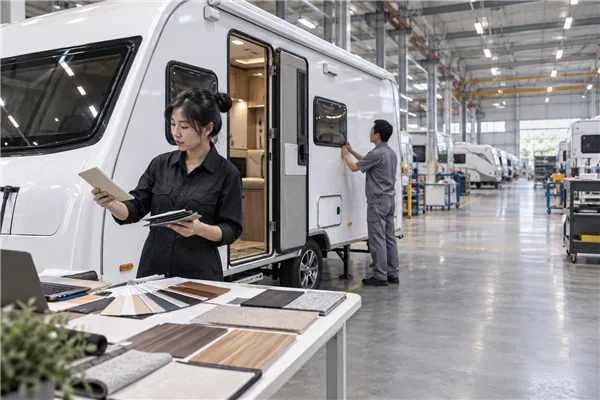
The brand package should include color references, exterior artwork files, badge placement, interior material direction, approved photography and documentation language. Use revision numbers and sign-off dates. A factory needs more than a mood board when several panels, suppliers and installation points are involved.
For every visible change, check what sits behind it. A new panel color may affect material availability, repair stock, adhesive compatibility or batch matching. An experienced project team raises these questions before the first sample rather than after production has started.
 RVDwell OEM TRAVEL TRAILERS
Need to compare a platform, custom requirement or factory process against your market brief?
Get a project checklist →Plan the first sample as a learning gate
The first sample should test the complete customer promise: appearance, layout, systems, documentation, handover and service access. Invite sales, service and operations stakeholders to review it against a written checklist. Record issues by category so cosmetic feedback is not confused with a safety or engineering decision.
Factory testing and shipment inspection should use the approved configuration, not a generic model description. Photograph the finished unit and retain the signed inspection record with the project file.
Build the launch support around the trailer
A private-label program needs more than the physical unit. Prepare specification sheets, owner handover materials, warranty boundaries, spare-parts logic and dealer training before the first delivery. A product page should describe approved features accurately instead of repeating concept-stage ideas.
For a first market launch, start with a manageable configuration. Too many option combinations can create training, stocking and warranty complexity that outweighs the benefit of apparent choice.
Buyer worksheet: questions to close before a quote
Use this short worksheet in a supplier meeting, a factory visit or a sample review. It is designed to turn customer requirements into records that engineering, production, quality and logistics teams can act on.
- Proven platform selected for the actual use case
- Brand assets and technical specifications version-controlled
- Sample review includes sales, service and operations
- Documentation and spare-parts approach approved before launch
- Customer-facing claims match the approved configuration
For a new RVDwell project, this information can be reviewed alongside the factory capability, the custom-build process and the agreed shipment-inspection scope. The final requirement should always reflect the destination market and approved product configuration.
What evidence to request from the factory
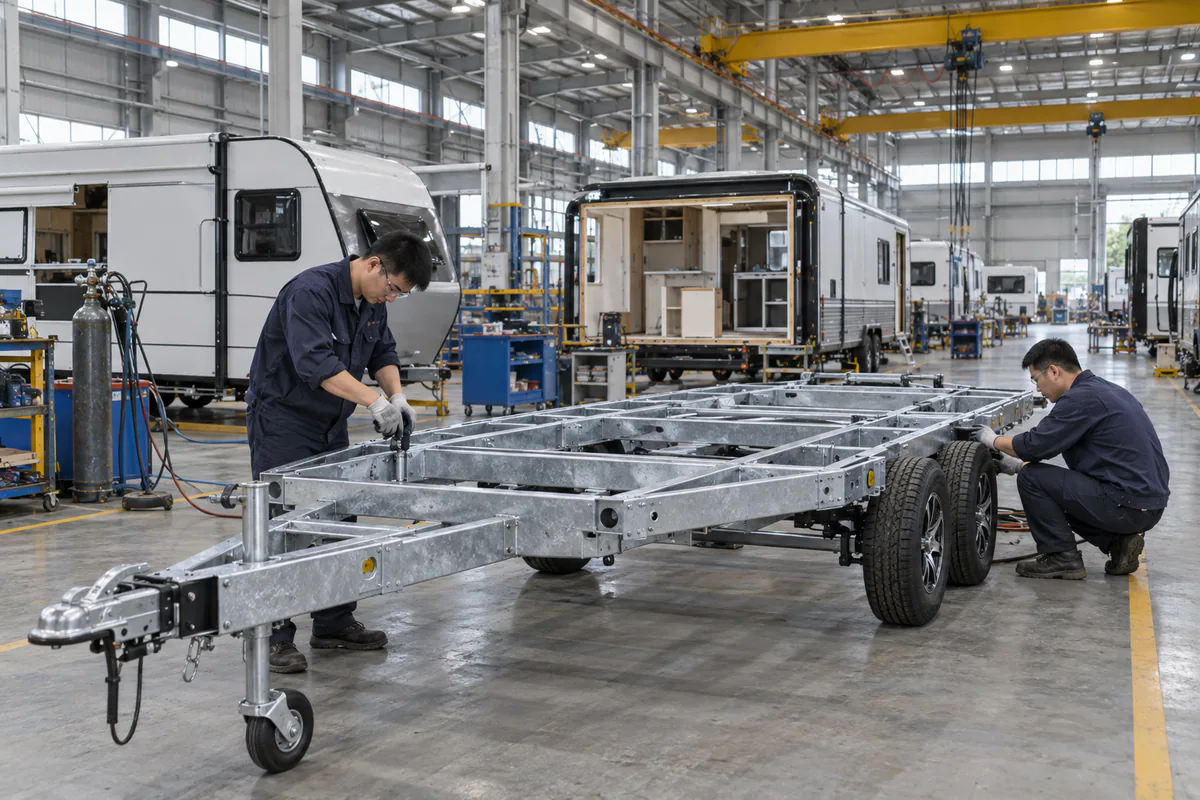
Useful evidence is specific to the unit and stage: an approved configuration record, production-stage photographs where appropriate, factory testing results, a corrective-action log and a shipment inspection record. It should show how customer requirements moved from the brief into the delivered trailer.
Do not rely on a generic certificate or a finished-product photograph as the only proof. Ask which records apply to your model, who completes them and how a failed check is corrected before the unit advances.
Frequently asked questions
Is private label the same as OEM?
Not always. Private label can use an ODM platform with approved visual and equipment changes, or it can become an OEM program when the buyer controls a more defined engineering requirement. The difference is the depth of agreed specification and change control.
Can a private-label launch start with one model?
Yes. One clearly positioned model can simplify training, parts planning and market feedback. The first launch should create a repeatable handover before the range expands.
Who owns the artwork and tooling?
That should be written into the commercial and technical agreement. Define file ownership, approved use, tooling costs, storage, replacement and what happens if the program changes supplier.
Reference sources
External requirements and market rules should be checked against the destination and final configuration. These authoritative starting points support the planning questions in this guide.