
 RVDwell OEM TRAVEL TRAILERS
RV Parts Fitment Verification: Confirm Compatibility before Dealer Release
Verify RV replacement-part fitment using unit identity, interface data, representative installation, functional checks, evidence and catalog controls.
Start with unit identity and as-built configuration, then compare the replacement part’s controlled interfaces and application limits. Complete a representative installation and functional check where uncertainty remains, document required kit items and publish unit-level effectivity in the parts system before dealer release.
- Define the service decision and its evidence boundary
- Capture reliable unit identity
- Define the fitment characteristics
- Check effectivity and prior changes
- Perform representative installation
- Publish kit and labor requirements
- Monitor incorrect-order signals
- Worked planning example
- Connect factory evidence, shipment and destination service
- Conclusion and next action
- Buyer worksheet
- Buyer FAQ
Who this guide is for
This guide is for RV importers, distributors, private-label brands, fleet operators, dealer-support teams and supplier-quality professionals planning an evidence-based after-sales process. Apply it to the actual product, installed configuration and destination rules. All examples are illustrative planning scenarios, not RVDwell customer histories, completed investigations, quotations or guaranteed results.
The buyer question is: How can an importer verify that an RV service part fits the correct unit? Use the six controls below to define ownership, effectivity, evidence and closure before releasing the next service decision. Keep reported symptoms, verified findings and legal or regulatory judgments clearly separate.
Define the service decision and its evidence boundary
RV model names often cover multiple option packages, suppliers and running changes. A part that fits one unit may not fit another with the same sales name. Fitment verification reduces incorrect shipments, repeated repairs and technician improvisation by connecting service information to the configuration actually delivered.
Service information must identify the product, configuration, revision and decision it supports. A drawing, part number or instruction copied from production is not automatically suitable for field use: the technician also needs access conditions, safe isolation, required tools, replacement criteria, verification steps and an understandable route when the unit does not match the document. Build the document from controlled engineering inputs, but test it against the way an importer, parts team or dealer will actually retrieve and use it. State effectivity at unit or configuration level wherever running changes and options make a model name too broad. Keep released information easy to find while preventing draft or obsolete copies from appearing current.
Capture reliable unit identity
Use VIN, serial number, production number or buyer asset ID according to the product and market. Confirm model, build date and relevant options. Avoid using customer photographs or retail trim name as the only selection basis when hidden interfaces can differ.
Evidence and approval
Evidence to retain: unit identity and as-built configuration reference. The practical risk is parts selected from an incomplete vehicle description. Record the unit or population, current revision, information source and decision owner. Mark estimated, reported and verified data differently. A later reviewer should be able to reconstruct the decision without relying on a private message or the memory of the person who attended the original call.
Define the fitment characteristics
List dimensions, mounting, connector, electrical or fluid ratings, software, finish and clearance that determine compatibility. Separate mandatory interfaces from preferences. Use controlled drawings and component data rather than measurements taken from one damaged part alone.
Evidence and approval
Evidence to retain: fitment characteristic checklist and source data. The practical risk is a visually similar part with an incompatible interface. Check the actual interface, task or returned evidence where practical. State test or review conditions and preserve limitations. When a representative sample is used, explain which configurations it supports and which differences still need confirmation before a broader service release.
Check effectivity and prior changes
Review original BOM, approved substitutions, deviations, service repairs and supersessions for the unit range. A later factory change may not apply backward without an adapter or procedure. Flag units whose history is uncertain for physical confirmation.
Evidence and approval
Evidence to retain: effectivity review and service-history check. The practical risk is application rules that ignore running changes. Identify every downstream user of the result. Dealers, parts teams, warranty reviewers, logistics staff and customers may need different controlled outputs. Confirm that each team can retrieve the released information and knows how to escalate a conflict or missing record.
Perform representative installation
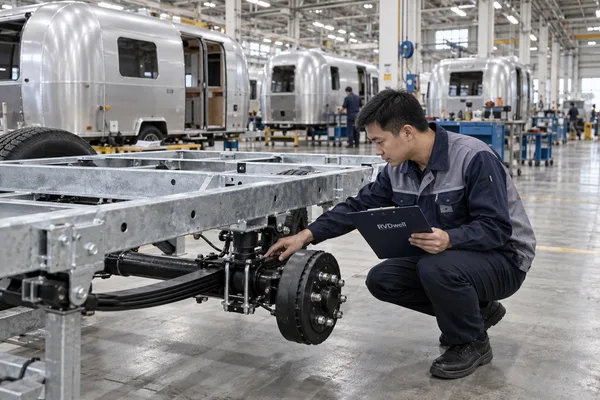
Install the part on a representative unit or validated fixture when documentation cannot fully prove fit. Record surrounding clearance, fastening, connection, software or parameter work and technician observations. Do not treat an unpowered bench fit as full vehicle functional evidence.
Evidence and approval
Evidence to retain: fitment trial and installed function record. The practical risk is compatibility released without installation evidence. Preserve the original symptom or finding before correction removes evidence. Link the approved response to the correct unit and verify anything disturbed during the work. A final photograph without the requirement, identity and method is useful context but not a complete closure record.
 RVDwell OEM TRAVEL TRAILERS
Need to apply “RV Parts Fitment Verification: Confirm Compatibility before Dealer Release” to a live order or installed fleet? Send the market, configuration, population and open evidence questions for a focused review.
Send Your Requirements →Publish kit and labor requirements
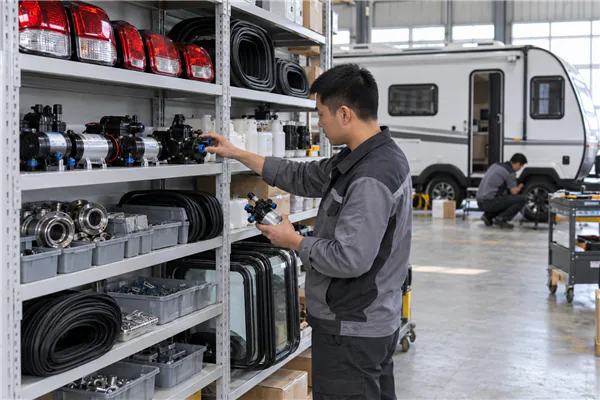
Define every included component, consumable, tool, instruction and expected local preparation. Link the fitment rule to the parts catalog and warranty system. A correct main component can still create a failed repair when a small adapter or seal is missing.
Evidence and approval
Evidence to retain: complete kit BOM and installation requirement. The practical risk is incomplete dealer orders. Review effectivity whenever supplier, part, software, tool, process or destination changes. Decide whether earlier evidence remains applicable and record the rationale. Similar appearance or a shared model name should not substitute for configuration control.
Monitor incorrect-order signals
Track returns, fitment complaints, extra parts requests and technician questions by part and unit range. Review whether the lookup rule, packaging label or source configuration is wrong. Correct the application data before simply reshipping the same item.
Evidence and approval
Evidence to retain: fitment return analysis and catalog correction. The practical risk is repeat errors treated as isolated ordering mistakes. Define closure and follow-up before release. Name the approver, completion evidence, monitoring period and trigger for renewed review. At repeat order or repeat repair, verify the assumptions again rather than copying the earlier decision without checking current facts.
Worked planning example
Illustrative fitment review: two trailers share a model name but use different awning controller generations. The catalog first narrows by production range, then asks for a connector identifier. A representative installation confirms the new controller needs an adapter harness and a parameter step. The service kit and instructions include both, and incorrect-return monitoring verifies the lookup rule.
Release should include technical review, a usability check and confirmation that connected records agree. Parts catalogs, bulletins, labor operations, warranty rules and training material often describe the same repair from different viewpoints. A revision in one source can therefore create a hidden conflict elsewhere. Record why the change was made, which units it affects and whether earlier instructions remain valid for older builds. When practical, observe a representative technician complete the task without informal coaching and retain their questions. After publication, monitor fitment questions, repeat contacts and early claims. These signals do not prove that a document is defective, but they help identify where the service solution needs clarification or new evidence.
Connect factory evidence, shipment and destination service
For an RVDwell project discussion, send the destination market, product type, quantities, relevant unit or configuration identifiers, current service network and the decision that needs evidence. RVDwell’s stated 8,000 m² Shenzhen factory provides context for production and support planning, but floor area alone does not prove a particular capability, certification, test result or service outcome. Request order- and unit-specific records. Factory testing should identify the method, conditions, acceptance criteria and corrections. Shipment inspection should reconcile the released configuration, visible condition, accessories, manuals, spare parts and packing. Editorial examples and website images are planning aids, not records of a named customer project.
Connect factory information to destination execution before shipment. Decide who owns receiving inspection, damage documentation, transport reinstatement, permitted installation, specialist electrical or gas review, commissioning, registration preparation, dealer training and customer handover. Preserve arrival condition before packaging is removed and distinguish transport damage from production or installation findings. Local rules, competent-person requirements and consumer or vehicle obligations vary by market and configuration. Confirm current requirements with responsible authorities and qualified advisers; this article does not determine legal compliance or authorize a field action.
Run a short evidence review before each service release. Engineering should identify the controlled interface and affected configuration; production should explain the as-built condition; quality should provide the applicable inspection or test record; parts should confirm identity, stock and kit contents; service should verify procedure and diagnostic logic; the destination team should confirm local tools, competence, language and completion records. Ask four questions for every important item: what evidence exists, which decision it supports, what limitation it has and what would trigger re-review. Protect confidential and personal data while retaining enough identity to control effectivity. Missing evidence should lead to an explicit action such as collecting the result, restricting release, piloting a repair or obtaining competent external advice. This workflow cannot guarantee an error-free vehicle, but it makes assumptions and unfinished work visible before they become repeated field problems.
Before placing a purchase order, buyers can turn this method into an appendix to the technical and commercial agreement. List the service deliverables due at design freeze, pilot build, shipment and local launch, including language, file format, revision owner and approval route. Define how serial or VIN information, bill-of-material effectivity and dealer feedback will be exchanged, while complying with applicable privacy and data-retention rules. Agree how urgent technical cases are acknowledged and who may approve parts, labor, concessions or temporary instructions. Separate target response times from guaranteed repair outcomes, because diagnosis and material availability depend on the actual case. During the pilot or first delivery, sample the complete information flow: identify one unit, find its applicable part, follow the diagnostic path, request support, document the result and confirm that the as-serviced configuration remains traceable. Record gaps as launch actions with owners and dates. For ongoing supply, schedule reviews around evidence and exposure rather than presentation volume. Examine open cases, repeat repairs, parts shortages, document conflicts, campaign completion and lessons that should change production. Buyers should also define how support continues if a component, dealer or supplier relationship changes. This contract-to-field connection makes after-sales readiness a planned product requirement instead of an informal promise made after vehicles arrive.
Conclusion and next action
Reliable fitment begins with the actual unit and controlled interface data. Verify uncertain applications physically, release complete kits and use return evidence to improve lookup rules. Model name alone is rarely enough for a long-lived RV population.
Before the next review, assemble: unit identity and as-built configuration reference; fitment characteristic checklist and source data; effectivity review and service-history check; fitment trial and installed function record; complete kit BOM and installation requirement; fitment return analysis and catalog correction. Mark missing items, evidence limits and the person authorized to decide each one. This creates a useful supplier discussion without presenting an estimate, sample image or template as completed project evidence.
Buyer worksheet: questions to close before a quote
Use this short worksheet in a supplier meeting, a factory visit or a sample review. It is designed to turn customer requirements into records that engineering, production, quality and logistics teams can act on.
- Capture reliable unit identity: retain unit identity and as-built configuration reference.
- Define the fitment characteristics: retain fitment characteristic checklist and source data.
- Check effectivity and prior changes: retain effectivity review and service-history check.
- Perform representative installation: retain fitment trial and installed function record.
- Publish kit and labor requirements: retain complete kit BOM and installation requirement.
- Monitor incorrect-order signals: retain fitment return analysis and catalog correction.
| Decision | Evidence to retain | Risk to address |
|---|---|---|
| Capture reliable unit identity | unit identity and as-built configuration reference | parts selected from an incomplete vehicle description |
| Define the fitment characteristics | fitment characteristic checklist and source data | a visually similar part with an incompatible interface |
| Check effectivity and prior changes | effectivity review and service-history check | application rules that ignore running changes |
| Perform representative installation | fitment trial and installed function record | compatibility released without installation evidence |
| Publish kit and labor requirements | complete kit BOM and installation requirement | incomplete dealer orders |
| Monitor incorrect-order signals | fitment return analysis and catalog correction | repeat errors treated as isolated ordering mistakes |
For a new RVDwell project, this information can be reviewed alongside the factory capability, the custom-build process and the agreed shipment-inspection scope. The final requirement should always reflect the destination market and approved product configuration.
What evidence to request from the factory
Useful evidence is specific to the unit and stage: an approved configuration record, production-stage photographs where appropriate, factory testing results, a corrective-action log and a shipment inspection record. It should show how customer requirements moved from the brief into the delivered trailer.
Do not rely on a generic certificate or a finished-product photograph as the only proof. Ask which records apply to your model, who completes them and how a failed check is corrected before the unit advances.
Frequently asked questions
Can VIN alone identify every RV service part?
Only if the manufacturer’s configuration system maps that VIN to the required component and running changes accurately.
What if the as-built record is incomplete?
Use physical identification and controlled measurements, then improve the unit record after the correct part is confirmed.
Does fitment verification include performance?
It should include the functional checks necessary to show the installed part works in the applicable system, not only physical fit.
Reference sources
These official sources provide general quality, measurement, RV-industry or U.S. vehicle-safety context. NHTSA material is specific to U.S. responsibilities where applicable. The sources do not certify RVDwell, classify a particular field action or determine compliance for another market. Confirm current rules, editions and interpretations with the responsible authorities and competent advisers.