
 RVDwell OEM TRAVEL TRAILERS
RV Pilot Build Readiness: Learn before Releasing the Production Batch
Plan an RV pilot build with frozen inputs, representative materials, station evidence, issue control, verification and a defined production-release decision.
Freeze the pilot configuration, confirm representative materials and tooling, release usable work instructions, define observations and tests, assign issue authority and set the production-release criteria. A pilot is a controlled learning build, not a rushed first customer unit or an informal demonstration.
- Define the decision and evidence boundary
- Freeze pilot purpose and configuration
- Confirm materials, tools and information
- Define observation and data capture
- Control issues without redesigning on the floor
- Complete planned verification
- Hold a release review
- Worked planning example
- Connect factory evidence with destination readiness
- Conclusion and next decision
- Buyer worksheet
- Buyer FAQ
Who this guide is for
This guide is written for RV importers, distributors, private-label brands, fleet buyers and supplier-quality teams that need evidence before approving design or repeat production. It should be used with the actual configuration and qualified participants. Examples are planning illustrations, not RVDwell customer histories, quotations, completed tests or guaranteed outcomes.
The buyer question is: What should be ready before an RV pilot build begins? Use the six controls below to define evidence, authority and effectivity before releasing the next commitment. Keep technical verification separate from destination approval and record what remains open.
Define the decision and evidence boundary
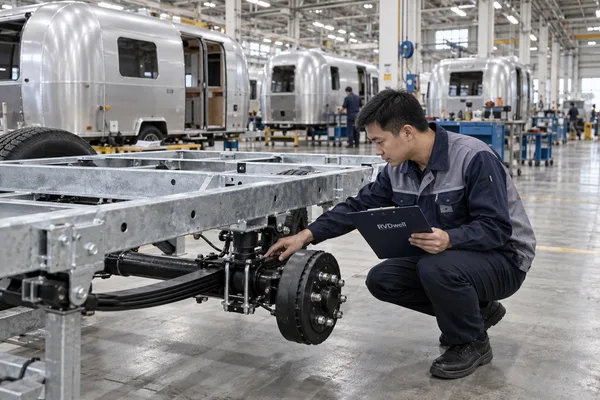
The pilot connects engineering outputs with the reality of stations, tools, access and operator sequence. It can reveal gaps before a batch repeats them, but only when the team knows which configuration is being built and how findings affect release. Buyers should plan witness points without disrupting ownership of safe production work.
Risk planning is valuable when it changes design or production behavior. Begin with the function or process step, then consider what can fail, the consequence, the cause and the existing controls. Rankings may help focus discussion, but they cannot prove acceptability and they should not replace competent review of high-consequence issues. Ask whether the analysis represents the ordered configuration, real operating conditions and current production method. Generic rows copied from another model can create a false sense of completeness. Where information is uncertain, state the assumption and choose a proportionate action: clarify the input, improve prevention, add verification, restrict the application or obtain specialist advice. Keep risk records connected to requirements, interfaces, work instructions and test evidence so the project can see whether a proposed action actually entered the product or process.
Freeze pilot purpose and configuration
State whether the build evaluates product design, process readiness, training, timing or a combination. Identify the exact baseline, options and approved deviations. If nonrepresentative parts are used, label them and record which conclusions they prevent the team from making.
Evidence and approval
Evidence to retain: pilot charter and configuration record. The practical risk is lessons being drawn from an undefined sample. Before approval, ask who created the source record, which revision applies and what evidence would reveal an error. Mark draft, estimated and confirmed information differently. Keep the decision and its basis together so another reviewer can reconstruct it without relying on a meeting participant’s memory.
Confirm materials, tools and information
Check released drawings, BOM, supplier parts, fixtures, calibrated equipment, work instructions and safety preparations. Avoid beginning with substitute materials simply to protect the calendar unless the deviation and learning limits are approved. Missing basics should appear on a readiness list before the unit enters the line.
Evidence and approval
Evidence to retain: readiness checklist and approved temporary conditions. The practical risk is pilot interruptions masking process weakness. Use the actual unit, interface or production step when practical. Record the method, condition and any limitation. If representative evidence is used, explain the population it supports and the differences that still require analysis or review. This prevents a convenient example from becoming an unsupported universal claim.
Define observation and data capture
Assign observers to specific questions such as fit, access, sequence, rework, time and inspection. Use a shared issue log with unit, station, evidence and owner. Unstructured photographs and chat messages are difficult to turn into controlled product or process corrections.
Evidence and approval
Evidence to retain: observation plan and issue-log template. The practical risk is learning being lost after the build. Identify the downstream commitment that depends on this control. Purchasing, assembly, testing, shipment and service may need different outputs from the same decision. Confirm that each responsible team can find the approved information and knows how to escalate a missing or conflicting result.
Control issues without redesigning on the floor
Give the build team a route to stop, clarify, temporarily contain or obtain engineering authorization. Record redlines and temporary instructions. A skilled operator improvisation may complete one unit while hiding an output that must be corrected before repeat production.
Evidence and approval
Evidence to retain: issue escalation and temporary authorization record. The practical risk is unapproved methods becoming normal work. Preserve the original observation and the approved response. A correction photograph is useful only when it identifies the unit, requirement and completed action. Where a result fails, retain the failure, containment, disposition and re-verification so recurrence can be analyzed rather than hidden.
 RVDwell OEM TRAVEL TRAILERS
Need to apply “RV Pilot Build Readiness: Learn before Releasing the Production Batch” to a real order? Send the destination, product type, quantity, current configuration and open evidence questions for a focused project review.
Send Your Requirements →Complete planned verification
Run the defined in-process and end-of-line checks on the pilot configuration, including re-verification after corrections. Distinguish a process finding from a product result. Shipment pressure should not convert an incomplete test into an assumed pass.
Evidence and approval
Evidence to retain: pilot inspection and test package. The practical risk is production release without representative evidence. Review effectivity whenever configuration, supplier, tool, method or destination changes. Decide whether existing evidence remains applicable and document the rationale. An earlier approval should not be reused simply because the filename or model name has remained the same.
Hold a release review
Classify findings by severity, recurrence potential and required owner. Confirm updates to design, BOM, instructions, PFMEA, control plan and training before authorizing the batch. Open items need explicit effectivity and limitations. Record what the pilot did and did not establish.
Evidence and approval
Evidence to retain: production-release decision and closed-action index. The practical risk is batch launch carrying unresolved pilot issues. Treat closure as a verified condition. Check the implemented output, record the authorized approver and communicate the result to the teams that perform the next step. At repeat order, confirm that the underlying assumptions still hold before copying the previous decision.
Worked planning example
Illustrative pilot: one representative trailer is built using the intended option package and production team. Observers capture an inaccessible fastening step, a confusing wiring instruction and a packaging interference. Engineering revises the interface, production trials the sequence, quality updates the control and logistics confirms clearance. The release meeting approves the batch only after defined corrections and evidence are linked to the current baseline.
At release, look beyond the number of actions marked closed. Confirm that physical changes, instructions, tools and records are available at the affected station and configuration. Observe representative execution where practical. Review temporary controls separately from permanent changes and give containment a clear exit rule. When customer feedback or a factory finding appears, check whether the risk was anticipated and whether the planned control worked as expected. Update the analysis without rewriting the original evidence. A useful lesson identifies the applicable units, exposure and limitation; it does not infer a fleet-wide rate from a few early cases. Carry accepted actions into repeat-order review so improvement becomes part of the controlled baseline rather than an informal memory held by one team member.
Connect factory evidence with destination readiness
For a RVDwell project discussion, provide the target market, intended application, product type, quantity, configuration status and the engineering decision you need to close. RVDwell’s stated 8,000 m² Shenzhen factory gives context for production planning, but facility size alone does not prove capability, certification, test results or delivery performance for a specific order. Request records tied to the actual model and unit. Factory testing should identify method, conditions, acceptance and correction. Shipment inspection should confirm released configuration, condition, accessories, documents and packing readiness. Illustrative website images and planning examples are not substitutes for order-specific evidence.
Plan destination work before shipment release. Identify unloading, transport reinstatement, permitted installation, competent electrical or other specialist review, receiving inspection, commissioning, registration-related preparation, staff training and customer handover. Give each task an owner, input document and acceptance record. Preserve arrival condition before packaging or protection is removed. Where local law, code or certification is involved, obtain advice for the actual market and configuration; this article does not make a compliance determination. Keep technical acceptance, commercial delivery and retail readiness as separate milestones so unfinished local work is not obscured by a signed transport receipt.
Use a short cross-functional evidence review before each major commitment. Engineering should identify the controlled requirement and applicable configuration; production should confirm how the work is performed; quality should show the planned observation, measurement or test; purchasing should confirm that supplier information and material status match the approved choice; logistics and the destination team should state the conditions that change packing, transport, receiving or local completion. Record disagreements as decisions with owners instead of blending them into vague meeting notes. For every important item, ask four questions: what evidence exists, what decision it supports, what limitation it has and what would trigger re-review. Sample records should include enough identity and context to be useful but should not expose unrelated customer data. If the review discovers missing evidence, choose an explicit response such as collecting the result, restricting release, accepting a controlled condition or obtaining competent external advice. Record the review date and the next required decision, then confirm that the responsible person has acknowledged it. At the following gate, revisit exceptions first so they do not disappear beneath newer tasks. This workflow does not guarantee an error-free product. It makes the basis of release visible and helps the next team recognize whether it is receiving a confirmed result, an approved assumption or unfinished work.
Conclusion and next decision
Use the pilot to learn systematically, not to prove success in advance. Define configuration, questions and release criteria before work starts. Convert every accepted lesson into a controlled output or process change before the production batch proceeds.
Before the next project review, assemble: pilot charter and configuration record; readiness checklist and approved temporary conditions; observation plan and issue-log template; issue escalation and temporary authorization record; pilot inspection and test package; production-release decision and closed-action index. Mark missing items and the person responsible for each decision. This creates a practical starting point for a supplier discussion without presenting an estimate or template as completed factory evidence.
Buyer worksheet: questions to close before a quote
Use this short worksheet in a supplier meeting, a factory visit or a sample review. It is designed to turn customer requirements into records that engineering, production, quality and logistics teams can act on.
- Freeze pilot purpose and configuration: retain pilot charter and configuration record.
- Confirm materials, tools and information: retain readiness checklist and approved temporary conditions.
- Define observation and data capture: retain observation plan and issue-log template.
- Control issues without redesigning on the floor: retain issue escalation and temporary authorization record.
- Complete planned verification: retain pilot inspection and test package.
- Hold a release review: retain production-release decision and closed-action index.
| Decision | Evidence to retain | Risk to address |
|---|---|---|
| Freeze pilot purpose and configuration | pilot charter and configuration record | lessons being drawn from an undefined sample |
| Confirm materials, tools and information | readiness checklist and approved temporary conditions | pilot interruptions masking process weakness |
| Define observation and data capture | observation plan and issue-log template | learning being lost after the build |
| Control issues without redesigning on the floor | issue escalation and temporary authorization record | unapproved methods becoming normal work |
| Complete planned verification | pilot inspection and test package | production release without representative evidence |
| Hold a release review | production-release decision and closed-action index | batch launch carrying unresolved pilot issues |
For a new RVDwell project, this information can be reviewed alongside the factory capability, the custom-build process and the agreed shipment-inspection scope. The final requirement should always reflect the destination market and approved product configuration.
What evidence to request from the factory
Useful evidence is specific to the unit and stage: an approved configuration record, production-stage photographs where appropriate, factory testing results, a corrective-action log and a shipment inspection record. It should show how customer requirements moved from the brief into the delivered trailer.
Do not rely on a generic certificate or a finished-product photograph as the only proof. Ask which records apply to your model, who completes them and how a failed check is corrected before the unit advances.
Frequently asked questions
Is the prototype the same as the pilot build?
Not always. A prototype may explore design choices; a pilot should use representative production conditions to evaluate readiness for repeat build.
Can the pilot unit be sold?
That is a commercial and regulatory decision, but any differences, rework and final configuration must be controlled and fully reviewed before release.
How many pilot units are required?
There is no universal number. Choose a quantity that covers important configurations and risks, and state the limits of the evidence.
Reference sources
These official sources provide general quality, measurement, industry or U.S. market context. They do not certify RVDwell or determine compliance for a product or destination. Confirm the current requirements, applicable editions and interpretation with the responsible authorities and competent specialists.