
 RVDwell OEM TRAVEL TRAILERS
How to Specify an Off-Road Travel Trailer for Your Market
A buyer guide to defining route, durability, power, water, service access and inspection requirements for off-road travel trailers.
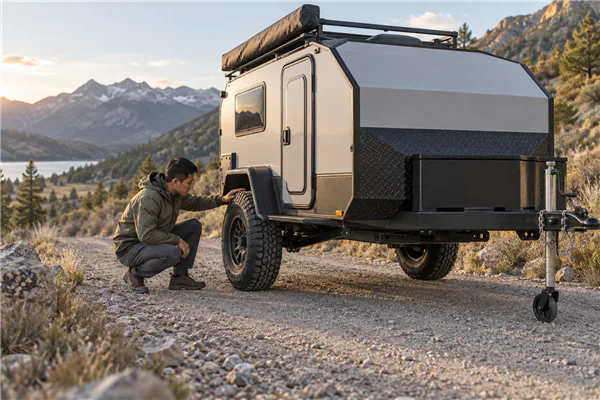
An off-road travel trailer should be specified around the route, loaded duty cycle, recovery environment and service model. Visual accessories do not prove that a unit is suitable for repeated rough-road use.
Who this guide is for
This guide is for distributors, rental operators and outdoor brands planning off-road or mixed-surface travel trailer programs.
Describe the intended terrain and user behavior first. Then decide which chassis, protection, storage, power and water features are necessary, optional or inappropriate for the target price and service network.
Turn route language into usable requirements
Ask where the trailer will actually travel: maintained gravel roads, seasonal tracks, remote campsites or mixed highway touring. Include distance, weather, resupply access, expected occupants and how often the unit will operate loaded. These inputs are more useful than a broad off-road label.
The result should be a short route profile that engineering, sales and service teams can all understand.
Specify durability and repairability together
Protection, storage latches, exterior finishes and underbody details should be considered with repair access and parts availability. A feature that looks strong in a product photo may create long downtime if it is difficult to inspect or replace in the target market.
For fleets, prioritize components that support repeatable turnovers and practical workshop work.
 RVDwell OEM TRAVEL TRAILERS
Need to compare a platform, custom requirement or factory process against your market brief?
Get a project checklist →Balance self-sufficiency with complexity
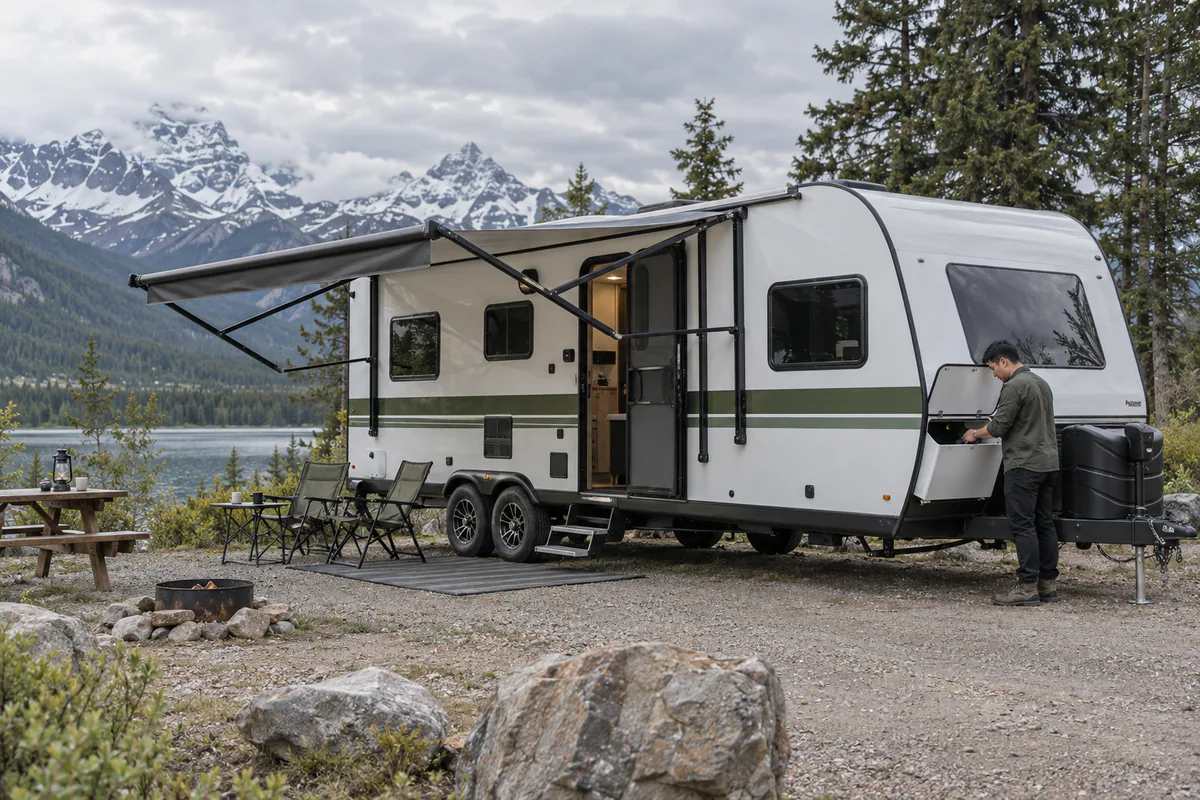
Solar, batteries, water storage, ventilation and cooking equipment can increase off-grid capability but also add mass, cost and service needs. Use the expected trip length and customer behavior to decide what capability is meaningful rather than selecting the largest possible package.
The factory should review the complete configuration, including location of equipment and access for maintenance.
Test against the approved product application
Factory testing can verify installed systems and visible build quality. It does not replace responsible destination-market validation or real operating feedback. Use the first sample and controlled deliveries to collect structured feedback from drivers, service teams and customers.
Feed that evidence into the next configuration release rather than adding untracked changes unit by unit.
Buyer worksheet: questions to close before a quote
Use this short worksheet in a supplier meeting, a factory visit or a sample review. It is designed to turn customer requirements into records that engineering, production, quality and logistics teams can act on.
- Route, climate and use frequency defined
- Durability choices reviewed with repair access
- Power and water systems matched to actual trip pattern
- Fleet turnover or dealer service needs documented
- Sample feedback converted into controlled changes
For a new RVDwell project, this information can be reviewed alongside the factory capability, the custom-build process and the agreed shipment-inspection scope. The final requirement should always reflect the destination market and approved product configuration.
What evidence to request from the factory
Useful evidence is specific to the unit and stage: an approved configuration record, production-stage photographs where appropriate, factory testing results, a corrective-action log and a shipment inspection record. It should show how customer requirements moved from the brief into the delivered trailer.
Do not rely on a generic certificate or a finished-product photograph as the only proof. Ask which records apply to your model, who completes them and how a failed check is corrected before the unit advances.
Frequently asked questions
What makes a trailer off-road capable?
Capability depends on the complete configuration and duty cycle, including running gear, body protection, loading, systems and towing setup. A visual package alone is not a reliable definition.
Are off-road features useful for rental fleets?
Some are, but rental use often prioritizes durability, clear handover and easy repair. The best feature set depends on the routes and customer profile.
Should off-grid systems be standard?
Only when they fit the intended buyer use, service support and price position.
Reference sources
External requirements and market rules should be checked against the destination and final configuration. These authoritative starting points support the planning questions in this guide.