
 RVDwell OEM TRAVEL TRAILERS
Four-Season Travel Trailer Design: What Buyers Should Specify
A practical design guide for buyers specifying travel trailers for cold, wet, hot or variable climates.
Four-season travel trailer design is a system decision involving insulation, air sealing, ventilation, heating, plumbing protection, power demand and customer operating instructions. Buyers should define the target climate and use pattern before making a four-season claim.
Who this guide is for
This guide is for distributors and brands planning travel trailers for climate-specific markets or extended-season use.
Avoid a generic four-season label. Define temperature exposure, humidity, occupancy, hookup availability, storage conditions and customer behavior so the manufacturer can identify an appropriate system package.
Describe the climate and operating pattern
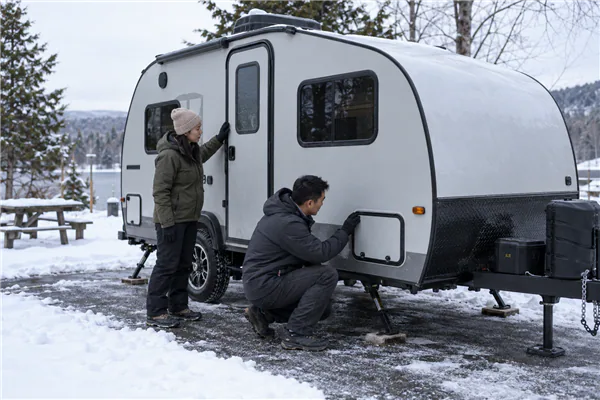
A trailer used for weekend ski trips with hookups has different needs from one used for long off-grid stays in changing weather. State the expected ambient conditions, use duration, occupancy, condensation risk and whether the unit will be stored or operated in freezing conditions.
This profile helps distinguish genuine design requirements from broad marketing language.
Coordinate the thermal and moisture strategy
Insulation alone does not solve comfort or moisture management. Review the enclosure, openings, ventilation, heating distribution, plumbing route and interior material choices as a connected system. Ask what user actions are needed to operate the trailer as intended.
Customer instructions matter because ventilation, loading and utility use can change interior conditions significantly.
 RVDwell OEM TRAVEL TRAILERS
Need to compare a platform, custom requirement or factory process against your market brief?
Get a project checklist →Plan energy and service implications
Heating, battery capacity, solar input, electrical protection and hookup availability should be considered together. A more capable climate package may require clearer service access, different user guidance or a different equipment priority than a fair-weather trailer.
For a destination market, ensure manuals and dealer training explain the approved system rather than promising performance under every possible condition.
Validate the configuration before launch
Use the sample review to examine fit, seals, system operation and documentation. Factory testing can confirm agreed functions, while field feedback is needed to understand real customer use. Keep the claim language proportional to the evidence and target application.
Any market-specific regulatory or safety requirement should be verified independently for the destination.
Buyer worksheet: questions to close before a quote
Use this short worksheet in a supplier meeting, a factory visit or a sample review. It is designed to turn customer requirements into records that engineering, production, quality and logistics teams can act on.
- Climate, occupancy and use duration defined
- Insulation, ventilation and plumbing treated as one system
- Energy and hookup assumptions documented
- Manuals explain customer operating responsibilities
- Marketing claims limited to approved application evidence
For a new RVDwell project, this information can be reviewed alongside the factory capability, the custom-build process and the agreed shipment-inspection scope. The final requirement should always reflect the destination market and approved product configuration.
What evidence to request from the factory
Useful evidence is specific to the unit and stage: an approved configuration record, production-stage photographs where appropriate, factory testing results, a corrective-action log and a shipment inspection record. It should show how customer requirements moved from the brief into the delivered trailer.
Do not rely on a generic certificate or a finished-product photograph as the only proof. Ask which records apply to your model, who completes them and how a failed check is corrected before the unit advances.
Frequently asked questions
Can every trailer be called four-season?
No. The phrase needs a defined climate and operating context. Buyers should avoid broad promises when the equipment, testing or customer instructions do not support them.
Does more insulation solve condensation?
Not by itself. Ventilation, moisture sources, thermal bridges, heating use and customer behavior all affect interior moisture.
What should dealers be trained on?
The installed system, operating limits, ventilation practice, utility preparation and service escalation path.
Reference sources
External requirements and market rules should be checked against the destination and final configuration. These authoritative starting points support the planning questions in this guide.