
 RVDwell OEM TRAVEL TRAILERS
RV Arrival Damage: Triage Transit Condition Before Dealer PDI
Separate RV arrival condition checks from dealer PDI using unit-linked photographs, immediate protection, notification and controlled repair decisions.
Make the area safe, identify the affected unit, record its condition before altering packaging, and notify the agreed carrier, supplier and insurance contacts promptly. Preserve evidence and obtain instructions for survey or repair. Complete technical PDI separately; an arrival damage record and a product acceptance checklist answer different questions.
- Define the decision and its boundary
- Capture condition before disturbance
- Separate safety from commercial acceptance
- Notify the relevant parties
- Distinguish observations from causes
- Control mitigation and repair
- Return the unit to a defined release path
- Worked planning example
- Connect factory evidence with destination readiness
- Conclusion and next decision
- Buyer worksheet
- Buyer FAQ
Who this guide is for
This guide is for importers, distributors, private-label brands and fleet teams making the specific purchasing or handover decision described below. Use it with the approved vehicle configuration and the parties who will perform the work. Examples and numbers are planning illustrations, not RVDwell test records, customer case histories, quotations or guaranteed outcomes.
The central question is: What should a depot do when an imported RV arrives damaged? Use the six decision checks below to record the evidence, responsible person and acceptance question before the next commitment. A short, traceable decision file is more useful than a collection of unlinked photographs or an approval that leaves important assumptions unstated. Review the linked guides when a broader sourcing or technical question also needs attention.
Define the decision and its boundary
The first receiving inspection establishes what was visible when the shipment reached the depot. Dealer PDI determines whether the trailer is ready for customer handover after local work and checks. Combining those activities into one undated checklist can make it harder to understand when a defect was observed or which action was authorized. This guide helps receiving managers build a practical first-hour response that supports both product protection and a clear later investigation.
Define acceptance before the review begins. Each requirement should have an identifiable reference, an observation or measurement method and a responsible decision maker. Separate the product requirement from the evidence used to examine it. For example, a dated photograph can show an installed component, while a functional result needs a stated method and conditions; neither should be described as proof of every destination obligation. Record whether the evidence is current, historical, sampled or representative. This gives the buyer a more useful basis for approval than a large folder with unclear origins. Invite service and operations reviewers where access, turnover or dealer preparation is part of the intended application. Their involvement should produce actionable observations that can be accepted, corrected or investigated, not an unstructured list of preferences added after the inspection scope was agreed.
Capture condition before disturbance
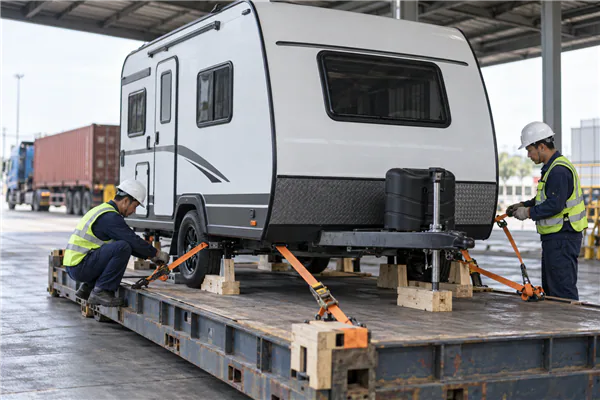
Take overview and close-up images showing the cargo location, unit number, packaging, seals where relevant and observed damage. Include a scale or contextual view when useful. Do not remove all protection before recording it. If unloading must proceed for safety or access, document the sequence and retain the information needed to explain what was changed and why.
Evidence and approval
Evidence to retain: arrival image set and unloading sequence record. The practical risk is lost evidence of the received condition. Agree the source of this information before the review meeting. Distinguish a confirmed record from a forecast or draft, and ask the person performing the work to explain any uncertainty. Record the decision in the same file used for order approval so the operational team does not need to reconstruct it from separate messages.
Separate safety from commercial acceptance
A damaged step, loose component or affected wheel area may require a movement restriction even while cause is unknown. Let competent staff decide whether the unit can be moved safely. Record the restriction and protect the area. Avoid asking a receiving signature or a transport document to serve as the complete technical decision about whether the RV may be used.
Evidence and approval
Evidence to retain: movement restriction and competent reviewer decision. The practical risk is unsafe relocation of an affected unit. Make the comparison repeatable. Use the same units, revision and commercial boundary for the information being evaluated. Where the requirement is open, name the person who will resolve it and the date needed. An explicit unresolved item is more useful than a confident assumption that is not supported by evidence.
Notify the relevant parties
Use the contacts and reporting requirements agreed for the shipment. Send a factual description, unit identification, images, location and immediate protective actions. Ask whether a survey or joint inspection is required. Carrier, insurance and supplier processes can differ, so do not assume one email satisfies every requirement or that a generic published deadline applies to the shipment.
Evidence and approval
Evidence to retain: notification log and written follow-up instructions. The practical risk is a delayed incident investigation. Check this point against the physical product or actual provider procedure wherever practical. Ask what changes if the selected option, quantity or route changes. Record any resulting preparation or verification work before approving the next step, and make sure the receiving team can identify the condition it should expect at delivery.
Distinguish observations from causes
Record cracked trim, a wet compartment or a bent bracket as observed conditions. A receiving team should not immediately classify every finding as manufacturing failure or transport damage. Compare loading records, packing condition and subsequent inspection evidence. Keep competing explanations visible until the people responsible for technical and commercial assessment have enough information to reach a supported conclusion.
Evidence and approval
Evidence to retain: observation log linked to baseline evidence. The practical risk is premature attribution of responsibility. Keep the original observation and the approved response together. If further evidence is needed, state the method, owner and acceptance question. A document should explain what was checked and what remains open; it should not imply that a narrow review establishes every performance or destination-market requirement for the complete RV.
 RVDwell OEM TRAVEL TRAILERS
Bring the open questions from “RV Arrival Damage: Triage Transit Condition Before Dealer PDI” to a project review. Include your destination, configuration, quantity and current evidence so the discussion can focus on the next decision.
Send Your Requirements →Control mitigation and repair
Prevent further damage where safe, but seek instructions before irreversible repair, dismantling or disposal removes evidence. Obtain a written repair scope, cost estimate and authorization path. Mark whether the action is emergency protection, diagnosis, temporary restoration or final repair. Keep replaced components available if requested and record the condition before and after the work.
Evidence and approval
Evidence to retain: repair estimate, authorization and before-after evidence. The practical risk is unrecoverable evidence or unauthorized costs. Identify the downstream team that relies on this decision. Confirm whether its instructions, budget, parts information or scheduled work need an update. Close the communication loop with an acknowledgement from that team, especially when the change affects a unit that has already entered production or a shipment that is already booked.
Return the unit to a defined release path
After the incident is addressed, complete the normal local PDI and any additional checks linked to the affected area. A cosmetic repair can still require examination of nearby seals or hardware. Record who releases the trailer for sale or fleet use. Feed confirmed causes back into packaging, loading or product controls for future shipments.
Evidence and approval
Evidence to retain: repair closure and local release record. The practical risk is a repaired unit released without reinspection. Treat closure as a verified outcome rather than a status label. Retain the final record, responsible approval and any applicable limits. At repeat order, review whether the underlying product or operating assumptions still hold before reusing the decision. This preserves useful experience while allowing the process to respond to actual changes.
Worked planning example
Illustrative depot exercise: a trailer arrives with visible damage to an entry-step assembly. The team photographs the assembly and packaging, restricts use of the entrance and notifies the shipment contacts. A competent reviewer checks whether adjacent mounting points or body seals need examination. The receiving manager obtains authorization for the agreed work and retains the replaced parts until instructed otherwise. Once repaired, the unit completes normal PDI plus the targeted step and seal checks. The final file preserves the original observation, technical finding, approved cost and release evidence. It does not assume the cause solely from the location of the damage.
When a finding appears, preserve the original observation and identify the requirement it concerns. Decide whether the unit needs containment, further examination, correction or a documented decision about an acceptable variation. Assign the action and the verification to named people. A photograph of rework is useful only if the reviewer can identify what was changed and why it satisfies the requirement. Where a result affects other units, check the extent of the issue before closing the individual case. Update the applicable work instruction, inspection criterion or configuration record when the approved action requires it. A useful quality decision therefore has two outcomes: the affected unit receives an appropriate release decision, and the production or service system receives the information needed to prevent the same unresolved question from appearing again.
Connect factory evidence with destination readiness
For a RVDwell enquiry, describe the product application, target market, expected quantity, current configuration and delivery objective in one concise brief. RVDwell’s stated 8,000 m² Shenzhen factory is the project context; the facility size does not itself establish a particular test result, certification or shipment outcome. Request project-specific records for the questions that matter to your order. Factory testing should identify the unit, method, conditions, result and any correction. Shipment inspection should connect the released configuration with condition, accessories, documents and packing readiness. Neither should be replaced by illustrative website images or an unrelated customer example.
Plan installation preparation at destination before the cargo is released. Identify any permitted reinstatement, local electrical or other specialist verification, receiving inspection, staff training and customer handover work. Give each task a named owner and an input document. When the unit arrives, preserve its observed condition and compare it with the approved baseline before recording the local completion work. Keep commercial delivery, technical acceptance and customer readiness as identifiable milestones. Where a destination requirement needs specialist interpretation, assign that review to the relevant party and record the conclusion for the actual market and configuration. This keeps the project file useful without overstating what a general buying guide or factory record can establish.
Conclusion and next decision
Arrival triage protects the unit and preserves a factual record. Keep it distinct from normal PDI, route notifications through the agreed channels and obtain repair authority before evidence is lost. The resulting file supports a clearer technical release and a more useful packaging or production improvement after the cause is confirmed.
Prepare the following before requesting a project review: arrival image set and unloading sequence record; movement restriction and competent reviewer decision; notification log and written follow-up instructions; observation log linked to baseline evidence; repair estimate, authorization and before-after evidence; repair closure and local release record. Mark any items that are still estimates and identify their decision owners. This gives the next conversation a useful starting point and helps the buyer distinguish a quotation assumption from a confirmed production or shipment requirement.
Buyer worksheet: questions to close before a quote
Use this short worksheet in a supplier meeting, a factory visit or a sample review. It is designed to turn customer requirements into records that engineering, production, quality and logistics teams can act on.
- Capture condition before disturbance: retain arrival image set and unloading sequence record.
- Separate safety from commercial acceptance: retain movement restriction and competent reviewer decision.
- Notify the relevant parties: retain notification log and written follow-up instructions.
- Distinguish observations from causes: retain observation log linked to baseline evidence.
- Control mitigation and repair: retain repair estimate, authorization and before-after evidence.
- Return the unit to a defined release path: retain repair closure and local release record.
| Decision | Evidence to retain | Risk to address |
|---|---|---|
| Capture condition before disturbance | arrival image set and unloading sequence record | lost evidence of the received condition |
| Separate safety from commercial acceptance | movement restriction and competent reviewer decision | unsafe relocation of an affected unit |
| Notify the relevant parties | notification log and written follow-up instructions | a delayed incident investigation |
| Distinguish observations from causes | observation log linked to baseline evidence | premature attribution of responsibility |
| Control mitigation and repair | repair estimate, authorization and before-after evidence | unrecoverable evidence or unauthorized costs |
| Return the unit to a defined release path | repair closure and local release record | a repaired unit released without reinspection |
For a new RVDwell project, this information can be reviewed alongside the factory capability, the custom-build process and the agreed shipment-inspection scope. The final requirement should always reflect the destination market and approved product configuration.
What evidence to request from the factory
Useful evidence is specific to the unit and stage: an approved configuration record, production-stage photographs where appropriate, factory testing results, a corrective-action log and a shipment inspection record. It should show how customer requirements moved from the brief into the delivered trailer.
Do not rely on a generic certificate or a finished-product photograph as the only proof. Ask which records apply to your model, who completes them and how a failed check is corrected before the unit advances.
Frequently asked questions
Should arrival inspection wait until the trailer is fully unpacked?
Record visible condition and packaging first, then document the unloading and unpacking sequence. Further inspection may follow, but the initial baseline should not be lost.
Does every arrival defect prove transit damage?
No. Record observations and compare factory, loading and receiving evidence before assigning cause. Some findings may require technical examination.
Can repair start immediately?
Take necessary safe protective actions, then follow the agreed notification and authorization process. Obtain survey or repair instructions before irreversible work when practical.
Reference sources
These sources provide general trade, packing or quality-system context. Trade.gov is a U.S. government reference, not a substitute for the rules at origin or destination. Confirm the actual transaction requirements with the responsible providers and specialists; a source link is not an endorsement or a certification of RVDwell.