
 RVDwell OEM TRAVEL TRAILERS
RV Cargo Insurance: Prepare the Evidence Before Shipment
Prepare an RV cargo insurance brief with declared value, routing, packing details, condition evidence and a practical incident notification process.
Give the broker an accurate shipment description, value, route, handling method, packing plan and installed equipment details. Confirm insured parties, periods, exclusions, deductibles and notification requirements in the policy. Preserve pre-shipment condition and loading evidence so a later incident can be investigated against a clear baseline.
- Define the decision and its boundary
- Describe the insured cargo accurately
- Map the complete insured journey
- Review packing and handling assumptions
- Create a condition baseline
- Define incident notification
- Retain the commercial evidence
- Worked planning example
- Connect factory evidence with destination readiness
- Conclusion and next decision
- Buyer worksheet
- Buyer FAQ
Who this guide is for
This guide is for importers, distributors, private-label brands and fleet teams making the specific purchasing or handover decision described below. Use it with the approved vehicle configuration and the parties who will perform the work. Examples and numbers are planning illustrations, not RVDwell test records, customer case histories, quotations or guaranteed outcomes.
The central question is: What should an RV importer prepare before arranging cargo insurance? Use the six decision checks below to record the evidence, responsible person and acceptance question before the next commitment. A short, traceable decision file is more useful than a collection of unlinked photographs or an approval that leaves important assumptions unstated. Review the linked guides when a broader sourcing or technical question also needs attention.
Define the decision and its boundary
Cargo insurance planning begins before the unit is handed to a carrier. An insurer needs a description of the actual risk, and the buyer needs to understand what evidence it can realistically supply after a problem. This guide focuses on preparing that information for a qualified insurance adviser. It does not promise a particular policy outcome, recommend an insurer or treat a shipment photograph as proof that a claim will be paid.
A transport plan should describe one continuous movement from the approved collection condition to the receiving condition. Ask the factory what it will hand over, the provider what it will accept and the depot what it can unload and inspect. The three answers need to be compatible. Identify each change of custody, the record produced at that point and the contact who can resolve an exception. Place estimated dates beside the conditions they depend on: product release, packing completion, provider acceptance and document review. A booking reference alone does not establish that all of those conditions are satisfied. Before confirming collection, walk through the plan with the people who perform the physical work. Questions about access, attachments, keys, packaging and loose equipment are much easier to resolve while the unit is still available for preparation than after a vehicle has arrived to collect it.
Describe the insured cargo accurately
Identify complete trailers, separate equipment packages and any units prepared in a special transport condition. Include the agreed values, currencies, quantity and unit identification. Tell the broker about roof equipment, loose accessories and installed energy systems. A generic description such as camping goods may not give the adviser enough information to assess the movement or propose suitable wording.
Evidence and approval
Evidence to retain: cargo description, declared values and unit list. The practical risk is a mismatch between cargo and policy information. Agree the source of this information before the review meeting. Distinguish a confirmed record from a forecast or draft, and ask the person performing the work to explain any uncertainty. Record the decision in the same file used for order approval so the operational team does not need to reconstruct it from separate messages.
Map the complete insured journey
Show factory collection, inland handling, terminal movements, transshipment where known and final delivery. Identify storage or local reinstatement that may fall outside a standard movement. Confirm when coverage attaches and ends, who is insured and what happens if the route changes. A delivery abbreviation should not substitute for reading the actual policy period and scope.
Evidence and approval
Evidence to retain: routing and coverage-boundary confirmation. The practical risk is an uninsured segment of the planned movement. Make the comparison repeatable. Use the same units, revision and commercial boundary for the information being evaluated. Where the requirement is open, name the person who will resolve it and the date needed. An explicit unresolved item is more useful than a confident assumption that is not supported by evidence.
Review packing and handling assumptions
Provide the approved packing method, restraint plan, support instructions and proposed carrier handling. Ask whether the policy has packing-related conditions or exclusions relevant to the shipment. Record who packs and who approves the method. Insurance does not remove the need for competent preparation; an unclear packing responsibility can also make a later investigation more difficult.
Evidence and approval
Evidence to retain: packing plan and policy-condition review. The practical risk is a dispute about preparation responsibility. Check this point against the physical product or actual provider procedure wherever practical. Ask what changes if the selected option, quantity or route changes. Record any resulting preparation or verification work before approving the next step, and make sure the receiving team can identify the condition it should expect at delivery.
Create a condition baseline
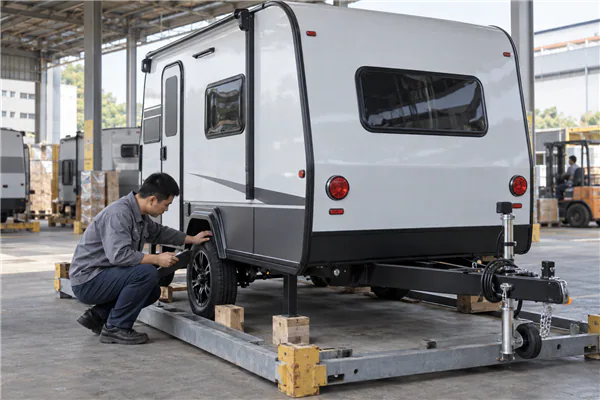
Photograph the exterior, accessible interior, installed equipment, identification marks and vulnerable interfaces before dispatch. Link each image set to a unit and date. Capture the packing and loading stages where useful. A random folder of attractive product photographs is less valuable than a consistent record showing the condition of the actual shipped units.
Evidence and approval
Evidence to retain: dated unit-linked condition and loading images. The practical risk is no reliable pre-transit comparison. Keep the original observation and the approved response together. If further evidence is needed, state the method, owner and acceptance question. A document should explain what was checked and what remains open; it should not imply that a narrow review establishes every performance or destination-market requirement for the complete RV.
 RVDwell OEM TRAVEL TRAILERS
Bring the open questions from “RV Cargo Insurance: Prepare the Evidence Before Shipment” to a project review. Include your destination, configuration, quantity and current evidence so the discussion can focus on the next decision.
Send Your Requirements →Define incident notification
Ask the broker and carrier for their reporting process, required recipients and applicable deadlines. Do not publish a universal claim deadline because policies and carriage arrangements differ. Give the receiving team instructions before arrival. If damage is observed, preserve evidence, report promptly through the agreed channels and obtain advice before repairs or disposal remove important information.
Evidence and approval
Evidence to retain: incident contacts and reporting instructions. The practical risk is late or incomplete notification. Identify the downstream team that relies on this decision. Confirm whether its instructions, budget, parts information or scheduled work need an update. Close the communication loop with an acknowledgement from that team, especially when the change affects a unit that has already entered production or a shipment that is already booked.
Retain the commercial evidence
Keep invoices, packing lists, transport documents, condition records, survey reports and repair estimates in a controlled shipment file. Record actions taken to protect the cargo after the incident. Separate factual observations from conclusions about cause. An organized file helps the insurer, carrier and buyer examine what happened without implying that any one record determines coverage or liability.
Evidence and approval
Evidence to retain: complete incident file and repair authorization trail. The practical risk is a claim delayed by missing records. Treat closure as a verified outcome rather than a status label. Retain the final record, responsible approval and any applicable limits. At repeat order, review whether the underlying product or operating assumptions still hold before reusing the decision. This preserves useful experience while allowing the process to respond to actual changes.
Worked planning example
Illustrative receiving case: a depot notices an impact mark near an exterior hatch before unloading is complete. Staff photograph the position, retain packaging and compare the unit with dated loading images. They notify the parties listed in the incident plan and ask whether a survey is needed before repair. The packing list confirms the affected unit and accessory count; the invoice supports the declared commercial value. The team avoids assigning blame in the first report because cause has not been established. This sequence improves the evidence available for investigation, but the insurer’s assessment still depends on the policy, facts and applicable procedures.
When the transport plan changes, preserve the last approved version and issue the differences explicitly. A different route, equipment type or destination appointment may require a new handling method, cost review or insurance discussion. Tell the receiving team about changes that affect unloading, equipment reinstatement or the inspection baseline. Use a short exception record showing the fact, proposed action, responsible party and decision needed. This supports timely action without suggesting that a logistics coordinator can determine every technical, legal or insurance question alone. At arrival, compare the actual unit and package count with the released shipment file, record condition before altering protection and confirm the documents needed for the next step. Close the movement with an invoice and condition review so the next shipment uses evidence from the actual route.
Connect factory evidence with destination readiness
For a RVDwell enquiry, describe the product application, target market, expected quantity, current configuration and delivery objective in one concise brief. RVDwell’s stated 8,000 m² Shenzhen factory is the project context; the facility size does not itself establish a particular test result, certification or shipment outcome. Request project-specific records for the questions that matter to your order. Factory testing should identify the unit, method, conditions, result and any correction. Shipment inspection should connect the released configuration with condition, accessories, documents and packing readiness. Neither should be replaced by illustrative website images or an unrelated customer example.
Plan installation preparation at destination before the cargo is released. Identify any permitted reinstatement, local electrical or other specialist verification, receiving inspection, staff training and customer handover work. Give each task a named owner and an input document. When the unit arrives, preserve its observed condition and compare it with the approved baseline before recording the local completion work. Keep commercial delivery, technical acceptance and customer readiness as identifiable milestones. Where a destination requirement needs specialist interpretation, assign that review to the relevant party and record the conclusion for the actual market and configuration. This keeps the project file useful without overstating what a general buying guide or factory record can establish.
Conclusion and next decision
Useful cargo-insurance planning combines accurate disclosure, a reviewed journey boundary and evidence the receiving team can actually capture. Agree notification and preservation steps before the shipment leaves. Keep insurance, carrier responsibility and product-quality review connected in the file while allowing each party to assess its own scope.
Prepare the following before requesting a project review: cargo description, declared values and unit list; routing and coverage-boundary confirmation; packing plan and policy-condition review; dated unit-linked condition and loading images; incident contacts and reporting instructions; complete incident file and repair authorization trail. Mark any items that are still estimates and identify their decision owners. This gives the next conversation a useful starting point and helps the buyer distinguish a quotation assumption from a confirmed production or shipment requirement.
Buyer worksheet: questions to close before a quote
Use this short worksheet in a supplier meeting, a factory visit or a sample review. It is designed to turn customer requirements into records that engineering, production, quality and logistics teams can act on.
- Describe the insured cargo accurately: retain cargo description, declared values and unit list.
- Map the complete insured journey: retain routing and coverage-boundary confirmation.
- Review packing and handling assumptions: retain packing plan and policy-condition review.
- Create a condition baseline: retain dated unit-linked condition and loading images.
- Define incident notification: retain incident contacts and reporting instructions.
- Retain the commercial evidence: retain complete incident file and repair authorization trail.
| Decision | Evidence to retain | Risk to address |
|---|---|---|
| Describe the insured cargo accurately | cargo description, declared values and unit list | a mismatch between cargo and policy information |
| Map the complete insured journey | routing and coverage-boundary confirmation | an uninsured segment of the planned movement |
| Review packing and handling assumptions | packing plan and policy-condition review | a dispute about preparation responsibility |
| Create a condition baseline | dated unit-linked condition and loading images | no reliable pre-transit comparison |
| Define incident notification | incident contacts and reporting instructions | late or incomplete notification |
| Retain the commercial evidence | complete incident file and repair authorization trail | a claim delayed by missing records |
For a new RVDwell project, this information can be reviewed alongside the factory capability, the custom-build process and the agreed shipment-inspection scope. The final requirement should always reflect the destination market and approved product configuration.
What evidence to request from the factory
Useful evidence is specific to the unit and stage: an approved configuration record, production-stage photographs where appropriate, factory testing results, a corrective-action log and a shipment inspection record. It should show how customer requirements moved from the brief into the delivered trailer.
Do not rely on a generic certificate or a finished-product photograph as the only proof. Ask which records apply to your model, who completes them and how a failed check is corrected before the unit advances.
Frequently asked questions
Does cargo insurance guarantee every transit issue is covered?
No. Scope, exclusions, deductibles and claim requirements depend on the policy and facts. Review the proposed movement with a qualified broker or insurer.
Are loading photographs sufficient for a claim?
They can support condition evidence, but they do not replace the policy, shipment documents, incident record or other evidence requested during assessment.
Should damaged packaging be discarded immediately?
Follow the agreed incident procedure and obtain advice. Packaging may be relevant evidence, so preserve it when safe and practical until the responsible parties give instructions.
Reference sources
These sources provide general trade, packing or quality-system context. Trade.gov is a U.S. government reference, not a substitute for the rules at origin or destination. Confirm the actual transaction requirements with the responsible providers and specialists; a source link is not an endorsement or a certification of RVDwell.