
 RVDwell OEM TRAVEL TRAILERS
Remote RV Factory Audits: Build an Evidence-Based Live Agenda
Prepare a remote RV factory audit with a live production route, unit identification, record sampling, follow-up evidence and clear review limitations.
Agree a live production walkthrough, identify the units and stages shown, sample records linked to those stages and keep an open-action register. Ask questions beyond prepared footage and distinguish live observation from historical material. Use the result to guide supplier selection and follow-up verification, with clear limits on what remote evidence establishes.
- Define the decision and its boundary
- Set the review objective
- Agree a live production route
- Identify the units shown
- Sample process records
- Test an exception pathway
- Close with bounded conclusions
- Worked planning example
- Connect factory evidence with destination readiness
- Conclusion and next decision
- Buyer worksheet
- Buyer FAQ
Who this guide is for
This guide is for importers, distributors, private-label brands and fleet teams making the specific purchasing or handover decision described below. Use it with the approved vehicle configuration and the parties who will perform the work. Examples and numbers are planning illustrations, not RVDwell test records, customer case histories, quotations or guaranteed outcomes.
The central question is: How can an overseas buyer conduct a useful remote RV factory audit? Use the six decision checks below to record the evidence, responsible person and acceptance question before the next commitment. A short, traceable decision file is more useful than a collection of unlinked photographs or an approval that leaves important assumptions unstated. Review the linked guides when a broader sourcing or technical question also needs attention.
Define the decision and its boundary
A remote audit can help a buying team understand production controls before committing travel time or approving a sample. Its value depends on the questions and evidence, not on video resolution alone. This guide focuses on a live factory review for a particular RV procurement project. It explains how buyers can request a credible route, connect physical work to records and preserve the unresolved questions that require later onsite or independent examination.
Define acceptance before the review begins. Each requirement should have an identifiable reference, an observation or measurement method and a responsible decision maker. Separate the product requirement from the evidence used to examine it. For example, a dated photograph can show an installed component, while a functional result needs a stated method and conditions; neither should be described as proof of every destination obligation. Record whether the evidence is current, historical, sampled or representative. This gives the buyer a more useful basis for approval than a large folder with unclear origins. Invite service and operations reviewers where access, turnover or dealer preparation is part of the intended application. Their involvement should produce actionable observations that can be accepted, corrected or investigated, not an unstructured list of preferences added after the inspection scope was agreed.
Set the review objective
Decide whether the session is for initial screening, a production-progress review or an acceptance-related question. Those objectives require different evidence. Identify the target platform and the market brief before designing the agenda. A broad factory introduction may be useful commercially, but it should not be reported internally as a completed process audit of an unexamined product program.
Evidence and approval
Evidence to retain: audit purpose, platform and agenda. The practical risk is a promotional tour mistaken for verification. Agree the source of this information before the review meeting. Distinguish a confirmed record from a forecast or draft, and ask the person performing the work to explain any uncertainty. Record the decision in the same file used for order approval so the operational team does not need to reconstruct it from separate messages.
Agree a live production route
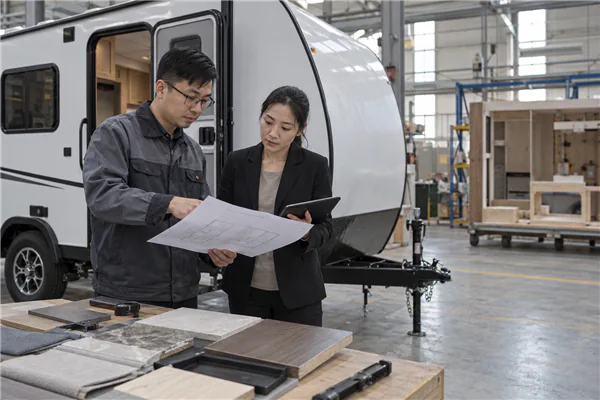
Request relevant incoming material, chassis, body, fit-out and final inspection areas where available. Ask the host to identify which stages are active and which are being shown historically. Permit reasonable safety and confidentiality boundaries while preserving the questions the buyer needs answered. Record any inaccessible area as a review limitation rather than assuming its process is satisfactory.
Evidence and approval
Evidence to retain: live route and stated access limitations. The practical risk is unexamined stages disappearing from the report. Make the comparison repeatable. Use the same units, revision and commercial boundary for the information being evaluated. Where the requirement is open, name the person who will resolve it and the date needed. An explicit unresolved item is more useful than a confident assumption that is not supported by evidence.
Identify the units shown
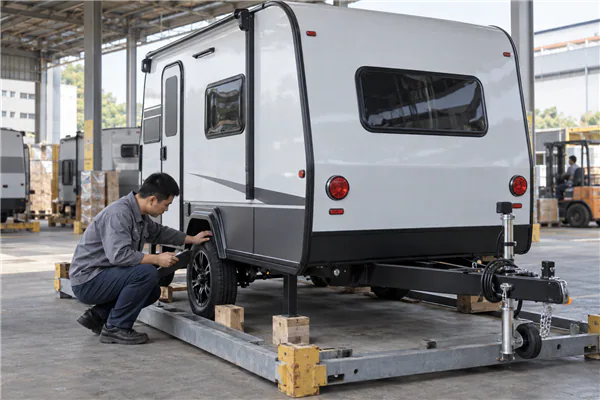
Ask for suitable unit or batch identification and configuration context before evaluating workmanship. A different model can demonstrate a general process but cannot automatically prove that the buyer’s custom arrangement is controlled. Link observations to the stage and date. Where commercial privacy requires masking customer data, use agreed anonymized references that still preserve the connection between unit and record.
Evidence and approval
Evidence to retain: unit references and configuration context. The practical risk is evidence attributed to the wrong program. Check this point against the physical product or actual provider procedure wherever practical. Ask what changes if the selected option, quantity or route changes. Record any resulting preparation or verification work before approving the next step, and make sure the receiving team can identify the condition it should expect at delivery.
Sample process records
Request examples of an incoming check, engineering release, inspection result and corrective-action closure. Ask the host to explain how a record follows the physical work just observed. A blank form shows intended structure; a completed unit-linked record gives different evidence. Record whether the information is current, historical or a demonstration so the later assessment does not overstate it.
Evidence and approval
Evidence to retain: completed record samples with context. The practical risk is blank templates treated as operating evidence. Keep the original observation and the approved response together. If further evidence is needed, state the method, owner and acceptance question. A document should explain what was checked and what remains open; it should not imply that a narrow review establishes every performance or destination-market requirement for the complete RV.
 RVDwell OEM TRAVEL TRAILERS
Bring the open questions from “Remote RV Factory Audits: Build an Evidence-Based Live Agenda” to a project review. Include your destination, configuration, quantity and current evidence so the discussion can focus on the next decision.
Send Your Requirements →Test an exception pathway
Ask what happens when a component differs from the approved bill of materials or a test fails. Follow one anonymized example through containment, decision, correction and recheck. The response should identify responsible people and records. This is more informative than only asking whether the factory has quality control, because it exposes how normal production responds when something does not match.
Evidence and approval
Evidence to retain: exception example and closure trail. The practical risk is a process described only under ideal conditions. Identify the downstream team that relies on this decision. Confirm whether its instructions, budget, parts information or scheduled work need an update. Close the communication loop with an acknowledgement from that team, especially when the change affects a unit that has already entered production or a shipment that is already booked.
Close with bounded conclusions
List what was observed, which evidence was sampled, the remaining questions and the required follow-up. Name owners and dates. A remote session may support the next sourcing gate while leaving specific issues unresolved. State those limitations in the report and decide whether sample review, a visit or third-party verification is needed before the following commercial commitment.
Evidence and approval
Evidence to retain: action register and conditional review conclusion. The practical risk is an unsupported unconditional approval. Treat closure as a verified outcome rather than a status label. Retain the final record, responsible approval and any applicable limits. At repeat order, review whether the underlying product or operating assumptions still hold before reusing the decision. This preserves useful experience while allowing the process to respond to actual changes.
Worked planning example
Illustrative live agenda: the buyer requests a chassis-stage unit, a unit in systems fit-out and one completed trailer. During the tour, the team asks how an equipment change is transferred from engineering to the fit-out bay. The host shows an anonymized revision and the matching inspection record. A requested water-test observation is unavailable that day, so it becomes a dated follow-up rather than an assumed pass. The purchasing report distinguishes the observed process, sampled historical record and open test evidence. That distinction makes the result more useful to the technical reviewer and prevents a good video call from becoming a claim that every production requirement has been verified.
When a finding appears, preserve the original observation and identify the requirement it concerns. Decide whether the unit needs containment, further examination, correction or a documented decision about an acceptable variation. Assign the action and the verification to named people. A photograph of rework is useful only if the reviewer can identify what was changed and why it satisfies the requirement. Where a result affects other units, check the extent of the issue before closing the individual case. Update the applicable work instruction, inspection criterion or configuration record when the approved action requires it. A useful quality decision therefore has two outcomes: the affected unit receives an appropriate release decision, and the production or service system receives the information needed to prevent the same unresolved question from appearing again.
Connect factory evidence with destination readiness
For a RVDwell enquiry, describe the product application, target market, expected quantity, current configuration and delivery objective in one concise brief. RVDwell’s stated 8,000 m² Shenzhen factory is the project context; the facility size does not itself establish a particular test result, certification or shipment outcome. Request project-specific records for the questions that matter to your order. Factory testing should identify the unit, method, conditions, result and any correction. Shipment inspection should connect the released configuration with condition, accessories, documents and packing readiness. Neither should be replaced by illustrative website images or an unrelated customer example.
Plan installation preparation at destination before the cargo is released. Identify any permitted reinstatement, local electrical or other specialist verification, receiving inspection, staff training and customer handover work. Give each task a named owner and an input document. When the unit arrives, preserve its observed condition and compare it with the approved baseline before recording the local completion work. Keep commercial delivery, technical acceptance and customer readiness as identifiable milestones. Where a destination requirement needs specialist interpretation, assign that review to the relevant party and record the conclusion for the actual market and configuration. This keeps the project file useful without overstating what a general buying guide or factory record can establish.
Conclusion and next decision
Remote reviews work best when the buyer can connect a live stage, a traceable record and a responsible decision. Keep the agenda specific and conclusions bounded. Use unanswered questions to define the next verification step instead of converting a walkthrough into a broader approval than the evidence supports.
Prepare the following before requesting a project review: audit purpose, platform and agenda; live route and stated access limitations; unit references and configuration context; completed record samples with context; exception example and closure trail; action register and conditional review conclusion. Mark any items that are still estimates and identify their decision owners. This gives the next conversation a useful starting point and helps the buyer distinguish a quotation assumption from a confirmed production or shipment requirement.
Buyer worksheet: questions to close before a quote
Use this short worksheet in a supplier meeting, a factory visit or a sample review. It is designed to turn customer requirements into records that engineering, production, quality and logistics teams can act on.
- Set the review objective: retain audit purpose, platform and agenda.
- Agree a live production route: retain live route and stated access limitations.
- Identify the units shown: retain unit references and configuration context.
- Sample process records: retain completed record samples with context.
- Test an exception pathway: retain exception example and closure trail.
- Close with bounded conclusions: retain action register and conditional review conclusion.
| Decision | Evidence to retain | Risk to address |
|---|---|---|
| Set the review objective | audit purpose, platform and agenda | a promotional tour mistaken for verification |
| Agree a live production route | live route and stated access limitations | unexamined stages disappearing from the report |
| Identify the units shown | unit references and configuration context | evidence attributed to the wrong program |
| Sample process records | completed record samples with context | blank templates treated as operating evidence |
| Test an exception pathway | exception example and closure trail | a process described only under ideal conditions |
| Close with bounded conclusions | action register and conditional review conclusion | an unsupported unconditional approval |
For a new RVDwell project, this information can be reviewed alongside the factory capability, the custom-build process and the agreed shipment-inspection scope. The final requirement should always reflect the destination market and approved product configuration.
What evidence to request from the factory
Useful evidence is specific to the unit and stage: an approved configuration record, production-stage photographs where appropriate, factory testing results, a corrective-action log and a shipment inspection record. It should show how customer requirements moved from the brief into the delivered trailer.
Do not rely on a generic certificate or a finished-product photograph as the only proof. Ask which records apply to your model, who completes them and how a failed check is corrected before the unit advances.
Frequently asked questions
Can a remote audit replace every onsite check?
No. It can support defined sourcing questions, but physical examination, independent tests or destination-specific reviews may still be needed. State the limits of the session.
Are prerecorded videos useful?
They can provide context if identified as historical material. Keep them distinct from live observations and records for the current production program.
What should be issued after the call?
A factual report with observed stages, record references, limitations, open actions, owners and the evidence needed for the next approval gate.
Reference sources
These sources provide general trade, packing or quality-system context. Trade.gov is a U.S. government reference, not a substitute for the rules at origin or destination. Confirm the actual transaction requirements with the responsible providers and specialists; a source link is not an endorsement or a certification of RVDwell.