
 RVDwell OEM TRAVEL TRAILERS
Travel Trailer Manufacturer Audit Checklist for B2B Buyers
A practical factory-audit framework for distributors, private-label brands and rental operators sourcing travel trailers.
A useful travel trailer manufacturer audit follows the product from the incoming-material area to shipment preparation. Buyers should test whether engineering records, in-process checks, supplier control, final inspection and project communication connect to the exact trailer they intend to sell or operate.
Who this guide is for
This guide is for importers, distributors, fleet operators and outdoor brands that need evidence before they approve a new travel trailer supplier.
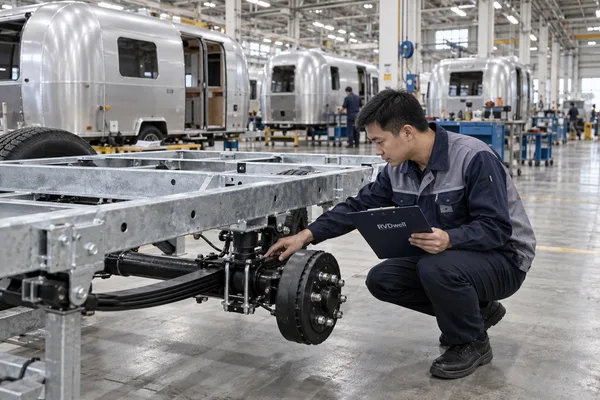
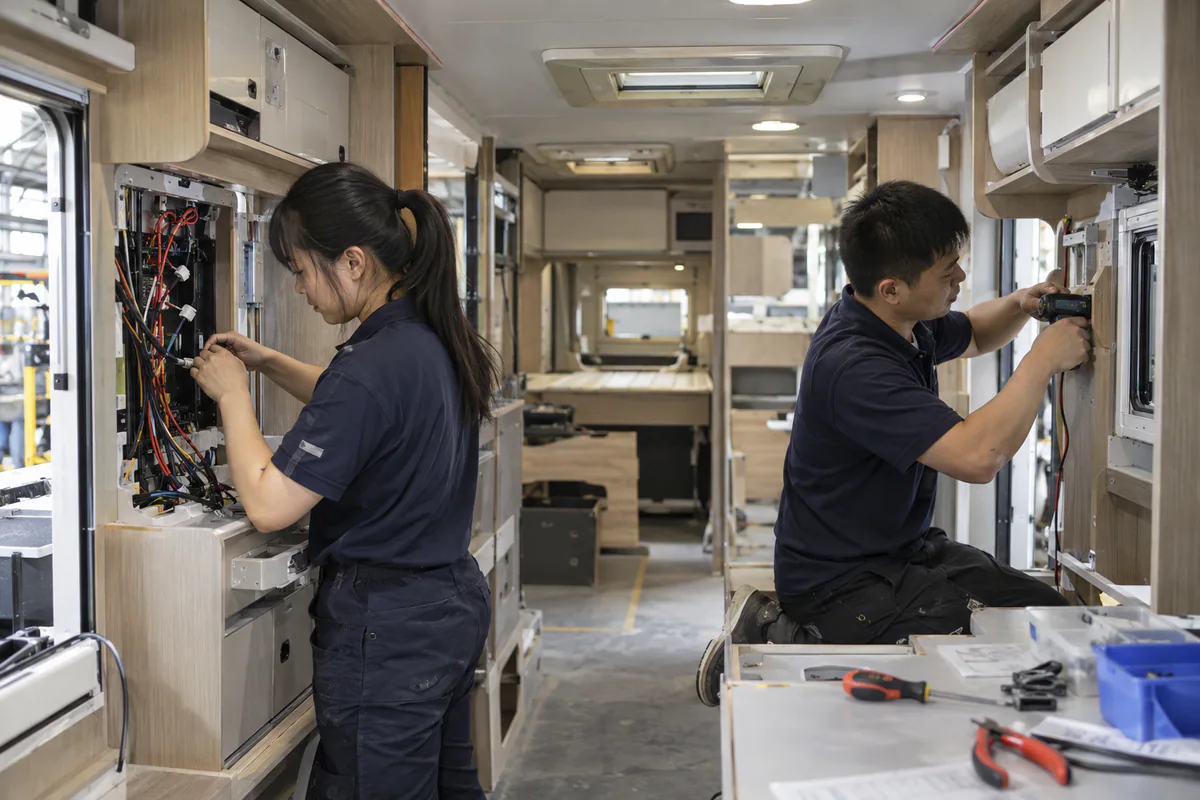
Treat a factory visit as a process review rather than a showroom visit. Ask to see one completed unit, one unit in fit-out and one unit at the chassis or body stage. That sequence exposes handoffs that a finished trailer cannot show.
Map the production flow before you travel
Request a simple production map before the audit: engineering release, incoming materials, chassis work, body build, systems fit-out, final testing and loading. Use that map to plan questions around each gate. If the team cannot explain when a drawing, part number or customer requirement becomes controlled on the floor, that gap should be resolved before a production order.
At an 8,000 m虏 integrated factory, the value is not the square-meter figure by itself. The useful evidence is whether fabrication, fit-out, testing and shipment preparation have defined owners and records. Ask what follows the trailer through those stages and how a nonconformance is closed.
Inspect records as closely as the hardware
A clean weld or well-finished cabinet is not enough evidence of repeatability. Ask for an anonymized sample of an incoming inspection record, an in-process sign-off, a change notice and a final inspection checklist. The names and commercial data can be hidden; what matters is whether the record identifies the unit, requirement, result and responsible reviewer.
For a private-label program, verify that the controlled document references the approved exterior, equipment list and market-specific requirements. A factory may build good standard units yet still struggle if customer changes arrive only in chat messages or informal spreadsheets.
 RVDwell OEM TRAVEL TRAILERS
Need to compare a platform, custom requirement or factory process against your market brief?
Get a project checklist →Test the quality-control loop
Ask which checks stop a unit from advancing and who can release it. Quality control is strongest when inspectors can raise an issue independently of output targets, when rework is recorded, and when recurring issues are fed back to training or engineering. A final inspection cannot reliably compensate for weak controls at earlier stages.
During a factory test, observe how the team checks installed systems, seals, towing interfaces and cosmetic completion against an agreed list. The exact checklist will vary by trailer and destination market, so buyers should request a project-specific version before shipment.
Close the audit with an action register
Do not end an audit with a verbal impression. Capture observations in an action register with the requirement, evidence seen, owner, due date and acceptance method. Separate critical launch blockers from improvements that can be managed after the first sample. This makes supplier comparison more objective and creates a useful starting point for a quality agreement.
If a visit is remote, request dated video from each production stage, a live walkthrough and digital copies of the same records. Remote evidence is not identical to a visit, but it can help a buying team narrow the supplier list before travel.
Buyer worksheet: questions to close before a quote
Use this short worksheet in a supplier meeting, a factory visit or a sample review. It is designed to turn customer requirements into records that engineering, production, quality and logistics teams can act on.
- Production flow mapped from incoming materials to loading
- Engineering release and revision control demonstrated
- Incoming, in-process and final inspection records sampled
- Change-control path explained for customer requirements
- Shipment inspection and corrective-action ownership agreed
For a new RVDwell project, this information can be reviewed alongside the factory capability, the custom-build process and the agreed shipment-inspection scope. The final requirement should always reflect the destination market and approved product configuration.
What evidence to request from the factory
Useful evidence is specific to the unit and stage: an approved configuration record, production-stage photographs where appropriate, factory testing results, a corrective-action log and a shipment inspection record. It should show how customer requirements moved from the brief into the delivered trailer.
Do not rely on a generic certificate or a finished-product photograph as the only proof. Ask which records apply to your model, who completes them and how a failed check is corrected before the unit advances.
Frequently asked questions
How long should a supplier audit take?
Allow enough time to see several build stages, review documents and hold a close-out meeting. A half-day showroom visit may be useful for product familiarity, but a production audit usually needs more structured time and an agenda matched to the project risk.
Should a buyer audit every sub-supplier?
Not necessarily. Start with components that affect safety, regulatory fit, warranty exposure or delivery timing. Ask the trailer manufacturer how those suppliers are qualified, how incoming parts are checked and what happens when a component changes.
What is the best audit outcome?
The best outcome is not a perfect score. It is a documented decision: what is approved, what must be corrected before the next gate, and what evidence will confirm closure.
Reference sources
External requirements and market rules should be checked against the destination and final configuration. These authoritative starting points support the planning questions in this guide.