
 RVDwell OEM TRAVEL TRAILERS
Travel Trailer Export Shipping: Plan the Handover Before Loading
A B2B guide to travel trailer export shipping, including delivery terms, inspection, packing, documents and arrival preparation.
Travel trailer export shipping should be planned as a handover sequence: approved configuration, final inspection, packing and protection, document preparation, delivery-term responsibilities, loading and arrival inspection. Logistics works best when it is connected to the product release rather than added at the end.
Who this guide is for
This guide is for importers and distributors arranging international delivery of travel trailers from a manufacturer.
Agree the delivery term and responsibility map early. Then plan what evidence, documents and physical preparation are needed before the trailer leaves the factory.
Set the delivery responsibility map
Use the selected commercial delivery term to clarify who arranges transport, insurance, export documentation, loading, freight and destination handling. The commercial meaning of a term should be understood by the buyer, seller and logistics partners before shipment is booked.
Do not rely on shorthand such as "delivered" without defining the named place, handover point and responsibilities.
Connect inspection to shipment readiness
Complete the agreed pre-shipment inspection before the product becomes difficult to access. Confirm action closure, final configuration, accessories, documents and packing requirements. If a third-party inspection is used, give the inspector the project-specific checklist in advance.
The inspection record should be retained with the shipment file.
 RVDwell OEM TRAVEL TRAILERS
Need to compare a platform, custom requirement or factory process against your market brief?
Get a project checklist →Plan protection and loading with the product in mind
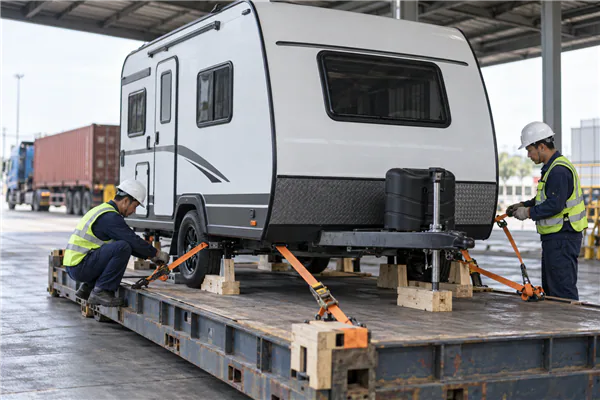
Travel trailer transport preparation depends on dimensions, vulnerable surfaces, loose items, access points and the selected method. Ask the manufacturer and logistics provider to agree protection, restraint and loading sequence. Do not assume a generic packing approach fits every configuration.
Photograph the condition and preparation at the agreed handover stage.
Prepare the receiving team
Arrival is not the end of the plan. The importer should know where units will be unloaded, who will inspect them, which documents are needed, how damage is recorded and what happens before retail or fleet release. A receiving checklist closes the loop between factory shipment and local launch.
This preparation reduces disputes caused by unclear condition or document handover.
Buyer worksheet: questions to close before a quote
Use this short worksheet in a supplier meeting, a factory visit or a sample review. It is designed to turn customer requirements into records that engineering, production, quality and logistics teams can act on.
- Delivery term and named handover point understood
- Pre-shipment inspection completed before loading
- Packing and loading plan match the unit configuration
- Condition photographs and document pack retained
- Receiving team has an arrival inspection process
For a new RVDwell project, this information can be reviewed alongside the factory capability, the custom-build process and the agreed shipment-inspection scope. The final requirement should always reflect the destination market and approved product configuration.
What evidence to request from the factory
Useful evidence is specific to the unit and stage: an approved configuration record, production-stage photographs where appropriate, factory testing results, a corrective-action log and a shipment inspection record. It should show how customer requirements moved from the brief into the delivered trailer.
Do not rely on a generic certificate or a finished-product photograph as the only proof. Ask which records apply to your model, who completes them and how a failed check is corrected before the unit advances.
Frequently asked questions
Which Incoterms rule should I use?
The appropriate rule depends on the transport method, commercial relationship and risk allocation. Use the official ICC rules and qualified commercial or logistics advice for the specific transaction.
Should the buyer attend loading?
It can be useful for a first program or a high-risk shipment, but a clear preparation checklist and evidence pack are important whether or not the buyer attends.
What documents should accompany the shipment?
The exact set depends on the transaction and destination. Agree the commercial, transport, inspection and product documents before production is complete.
Reference sources
External requirements and market rules should be checked against the destination and final configuration. These authoritative starting points support the planning questions in this guide.