
 RVDwell OEM TRAVEL TRAILERS
Travel Trailer Hitch and Coupling Selection for International Buyers
A B2B guide to matching towing interfaces, market requirements, installation checks and handover documentation.
A sound travel trailer hitch and coupling selection decision starts with the intended product application, the destination market and the customer handover model. Buyers should define the approved configuration, test it on a representative sample and record the evidence required before the unit moves to repeat production or shipment inspection.
Who this guide is for
This guide is for importers working across destination markets who need to evaluate travel trailer hitch and coupling selection as part of a B2B travel trailer sourcing, OEM or private-label program.
Treat the towing interface and its market-specific assumptions as an approval gate, not a late purchasing detail. The most reliable outcome comes from comparing the same requirement, evidence and acceptance condition across the factory, buying and service teams.
Start with the product application
The correct approach to travel trailer hitch and coupling selection depends on how the trailer will actually be used. Document the likely customer profile, towing environment, climate, operating frequency and service support before choosing a specification. This context prevents an attractive feature from being approved without considering the loads, interfaces or maintenance it creates.
Ask the factory to relate each option to the agreed platform rather than treating it as an isolated add-on. A practical review identifies which choices are proven on the base model, which need engineering confirmation and which could change the build sequence, delivery timing or service plan.
Translate customer requirements into an approval record
Create one requirements register for travel trailer hitch and coupling selection. Each line should identify the customer need, selected solution, drawing or equipment reference, responsible reviewer and acceptance method. This is more dependable than leaving important decisions in meeting notes, chat messages or product photographs.
For the first sample, review the requirement with sales, operations and after-sales representatives. Their questions often reveal whether a seemingly simple choice will affect user handover, daily inspection, spare parts or warranty administration after delivery.
 RVDwell OEM TRAVEL TRAILERS
Need to compare a platform, custom requirement or factory process against your market brief?
Get a project checklist →Use factory testing to verify the agreed configuration
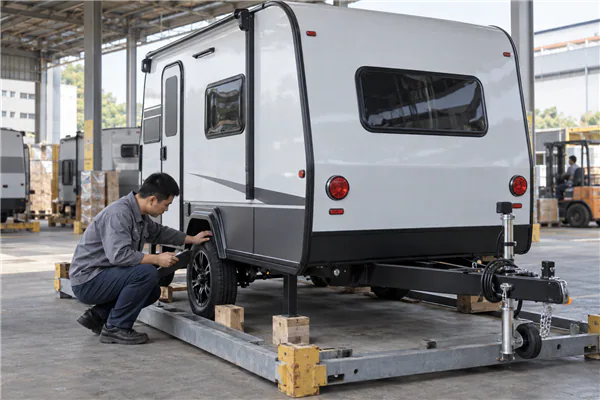
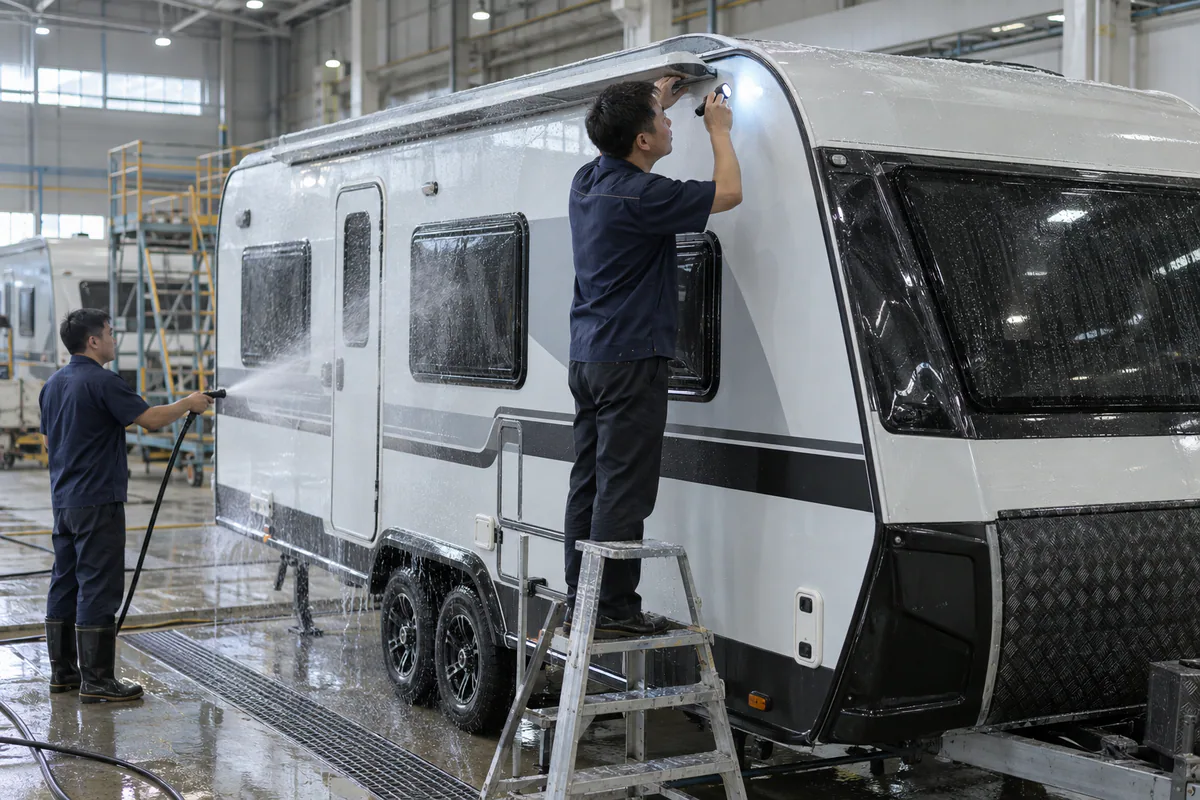
Factory testing should match the approved specification and the real product application. Before a test, agree what will be checked, who witnesses it, how results are recorded and what happens if a result is outside the agreed condition. A generic final checklist is useful, but it cannot replace project-specific verification.
Keep photographs, measurement records and any corrective-action closure with the unit file. At shipment inspection, compare the finished trailer against the released configuration, including accessories, labels, manuals and service-access provisions that the receiving team will need.
Control cost, lead time and change risk
A decision about travel trailer hitch and coupling selection can influence component sourcing, assembly sequence, documentation and inspection time. Request that the supplier separates established platform options from new development work and states any assumptions in the quotation. This makes commercial comparison more accurate.
If customer requirements change after release, assess the effect before asking the factory to proceed. A controlled change record protects the buyer from hidden cost or timing exposure and helps production work from the same revision as quality inspection and shipment preparation.
Prepare the receiving and service teams
The product handover should explain how the selected travel trailer hitch and coupling selection configuration is checked, used and serviced. Include the relevant item in dealer training, the pre-delivery inspection and the first-customer handover. This is especially important when a local distributor, rental operator and factory each hold a different part of the support responsibility.
Use early deliveries as a learning cycle. Log field questions and service findings by unit and configuration, then review the evidence before changing the next production batch. This turns customer feedback into an auditable improvement process instead of an informal preference.
Buyer worksheet: questions to close before a quote
Use this short worksheet in a supplier meeting, a factory visit or a sample review. It is designed to turn customer requirements into records that engineering, production, quality and logistics teams can act on.
- Product application and destination assumptions confirmed for travel trailer hitch and coupling selection
- Requirement, approved solution and acceptance method recorded
- Factory testing scope agreed before sample or repeat production
- Commercial assumptions and change-control path documented
- Shipment inspection and receiving-team handover prepared
For a new RVDwell project, this information can be reviewed alongside the factory capability, the custom-build process and the agreed shipment-inspection scope. The final requirement should always reflect the destination market and approved product configuration.
What evidence to request from the factory
Useful evidence is specific to the unit and stage: an approved configuration record, production-stage photographs where appropriate, factory testing results, a corrective-action log and a shipment inspection record. It should show how customer requirements moved from the brief into the delivered trailer.
Do not rely on a generic certificate or a finished-product photograph as the only proof. Ask which records apply to your model, who completes them and how a failed check is corrected before the unit advances.
Frequently asked questions
When should travel trailer hitch and coupling selection be decided?
Decide it before the configuration is frozen for production. Early definition lets the factory confirm compatibility, sourcing, testing and documentation rather than treating the item as a late exception.
What should a buyer request as evidence?
Request evidence that connects the approved requirement to the delivered unit: the controlled configuration, applicable factory testing, inspection results, photographs where appropriate and closure of any agreed corrective actions.
Can this be changed after the first sample?
Yes, but assess the technical, commercial and timing effect first. Record the decision, update the controlled file set and verify that the changed requirement reaches production, inspection and shipment documents.
Reference sources
External requirements and market rules should be checked against the destination and final configuration. These authoritative starting points support the planning questions in this guide.