
 RVDwell OEM TRAVEL TRAILERS
Travel Trailer Rental Fleet Maintenance: Plan for Turnover and Uptime
A B2B maintenance planning guide for travel trailer rental fleets, covering specification, inspections, parts and handover routines.
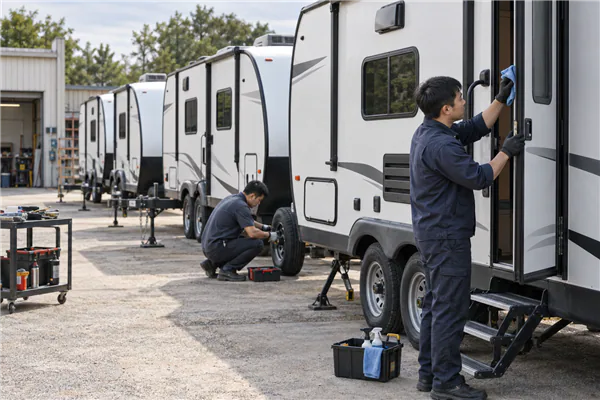
Rental fleet maintenance should be designed into the trailer program before the first order. The practical priorities are repeatable turnaround checks, durable customer-touch surfaces, service access, local parts planning and a clear method for recording damage or recurring issues.
Who this guide is for
This guide is for rental operators, importers and manufacturers planning commercial travel trailer fleets.
Specify for the many-user duty cycle, not for a single careful owner. The right fleet configuration reduces downtime and makes each handover easier for staff and customers.
Define the fleet duty cycle
List booking length, route type, customer experience level, turnaround window, cleaning method and service locations. This shows which items receive repeated use and which systems need simpler controls or better access.
A retail feature that looks attractive for occasional trips may not survive repeated customer handovers without a support plan.
Create a turnover inspection routine
Build a short, repeatable check for exterior damage, coupler and safety items, lights, doors, latches, water, power, accessories and cleanliness. The form should identify the unit, date, staff member and action needed. Keep it practical enough that staff will use it every time.
Separate immediate safety or availability issues from cosmetic records that can be scheduled.
 RVDwell OEM TRAVEL TRAILERS
Need to compare a platform, custom requirement or factory process against your market brief?
Get a project checklist →Stock parts based on failure impact
Do not try to stock every component. Identify items that are likely to cause a cancelled booking or long repair delay, then plan local stock, supplier lead time and replacement instructions. Record the exact approved part where configuration differences matter.
A good initial spares plan is refined with real fleet data after the first season.
Feed service findings back to the factory
Recurring issues are valuable product-development evidence. Use a shared issue format that describes the unit, usage context, failure, photograph, temporary action and proposed root-cause review. This helps separate a product issue from damage or operating error.
When a change is approved, control it through the same configuration process used for production.
Buyer worksheet: questions to close before a quote
Use this short worksheet in a supplier meeting, a factory visit or a sample review. It is designed to turn customer requirements into records that engineering, production, quality and logistics teams can act on.
- Fleet duty cycle and turnaround process defined
- Staff use a unit-specific inspection record
- Critical downtime parts identified and planned
- Customer controls and manuals kept simple
- Recurring issues returned to supplier through a controlled format
For a new RVDwell project, this information can be reviewed alongside the factory capability, the custom-build process and the agreed shipment-inspection scope. The final requirement should always reflect the destination market and approved product configuration.
What evidence to request from the factory
Useful evidence is specific to the unit and stage: an approved configuration record, production-stage photographs where appropriate, factory testing results, a corrective-action log and a shipment inspection record. It should show how customer requirements moved from the brief into the delivered trailer.
Do not rely on a generic certificate or a finished-product photograph as the only proof. Ask which records apply to your model, who completes them and how a failed check is corrected before the unit advances.
Frequently asked questions
How often should a rental trailer be inspected?
Use a pre-hire and return routine, plus planned preventive checks based on usage and local requirements. The exact schedule should reflect the product, route and operating model.
What should a rental fleet prioritize first?
Availability and safe repeatable handover. Choose features that support inspection, cleaning, service access and customer understanding.
Can a retail trailer be used in a fleet?
It can, but the duty cycle may justify changes to finishes, access, controls, documentation and parts support.
Reference sources
External requirements and market rules should be checked against the destination and final configuration. These authoritative starting points support the planning questions in this guide.