
 RVDwell OEM TRAVEL TRAILERS
Travel Trailer Weight, Payload and Loading: A B2B Buyer Guide
A practical guide to planning travel trailer weight, payload, options and loading assumptions before you approve a configuration.
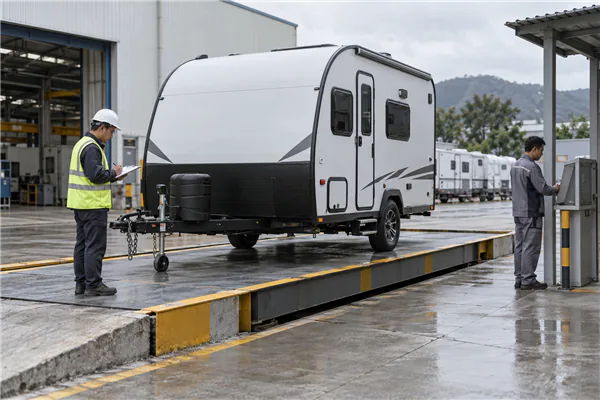
Travel trailer weight planning starts with the complete intended configuration, not a brochure base model. Buyers should identify how water, batteries, appliances, cargo, accessories and customer loading assumptions affect the final product and its towing suitability.
Who this guide is for
This guide is for B2B buyers who need to turn a market-ready feature list into a credible travel trailer specification.
Use a controlled mass-assumption sheet. It should show what is included in the base unit, which options change mass, what customer cargo is assumed and which values must be confirmed for the target market.
Build from the real configuration
A compact trailer can gain meaningful mass through batteries, water capacity, awnings, storage systems, appliances and outdoor equipment. The buyer should not compare a high-spec proposal with a low-spec reference without listing those additions.
Ask the manufacturer when mass information is estimated, when it is calculated and when the finished unit is checked. Use those labels clearly in sales and operational documents.
Link payload to customer use
Payload is not a marketing number; it is the space between the delivered configuration and the intended loading condition. A rental operator, a family tourer and an off-grid user may use that space very differently. Define the expected cargo, consumables and optional equipment for the target customer.
If the use case changes, return to the mass-assumption sheet before adding features late in the project.
 RVDwell OEM TRAVEL TRAILERS
Need to compare a platform, custom requirement or factory process against your market brief?
Get a project checklist →Coordinate towing and market requirements
The trailer is only one part of a towing combination. Buyers should communicate destination-market assumptions to dealers and customers without making unsupported compatibility claims. Local laws, vehicle ratings and registration requirements should be checked by the responsible market specialist.
A factory can provide product information, but the importer should verify the final retail or fleet context.
Use inspection records to close the loop
At factory testing and shipment inspection, verify the approved equipment list and identify any change that may affect the completed configuration. Keep the final record with the project documentation so later service or sales teams understand what was delivered.
This discipline reduces disputes caused by comparing different trailer specifications under the same model name.
Buyer worksheet: questions to close before a quote
Use this short worksheet in a supplier meeting, a factory visit or a sample review. It is designed to turn customer requirements into records that engineering, production, quality and logistics teams can act on.
- Base configuration and option mass assumptions listed
- Customer cargo and use profile defined
- Estimated, calculated and final values distinguished
- Towing and registration claims reviewed by destination market
- Final delivered configuration retained with project records
For a new RVDwell project, this information can be reviewed alongside the factory capability, the custom-build process and the agreed shipment-inspection scope. The final requirement should always reflect the destination market and approved product configuration.
What evidence to request from the factory
Useful evidence is specific to the unit and stage: an approved configuration record, production-stage photographs where appropriate, factory testing results, a corrective-action log and a shipment inspection record. It should show how customer requirements moved from the brief into the delivered trailer.
Do not rely on a generic certificate or a finished-product photograph as the only proof. Ask which records apply to your model, who completes them and how a failed check is corrected before the unit advances.
Frequently asked questions
Why do brochure weights differ from finished units?
A brochure may describe a base or illustrative configuration. Installed options, liquids, equipment and production tolerances can change the finished result. Use an approved configuration sheet for a buying decision.
Who is responsible for towing compatibility?
Responsibilities depend on the market and commercial model. Manufacturers, importers, dealers and end users should each work from accurate product information and applicable local requirements.
Should sales teams discuss payload?
Yes, but with clear definitions and no unsupported promises. A practical loading explanation can prevent mismatched customer expectations.
Reference sources
External requirements and market rules should be checked against the destination and final configuration. These authoritative starting points support the planning questions in this guide.