
 RVDwell OEM TRAVEL TRAILERS
Travel Trailer Chassis and Suspension: A Buyer Planning Guide
Learn how route, payload, towing use and service access should shape a travel trailer chassis and suspension brief.
A travel trailer chassis and suspension should be selected around the real route, loaded mass, towing environment, body attachment and service plan. Buyers should define the duty cycle before choosing an off-road look, axle package or ride-height target.
Who this guide is for
This guide is for product managers and buyers comparing touring, off-road, rental and distributor travel trailer specifications.
Start with the duty cycle: sealed-road touring, mixed surfaces, gravel access, remote use or repeated rental handovers. Then translate that use into load, clearance, protection, braking and service requirements.
Describe the route before naming components
A route profile should include surface type, typical distance, speed environment, climate, recovery support and expected load. Terms such as off-road or expedition are too broad to be engineering requirements by themselves. A manufacturer needs the actual operating assumptions to review compatibility.
This conversation may show that a simpler, well-matched touring setup is better than an expensive configuration chosen mainly for appearance.
Connect chassis decisions to mass and body design
The chassis is not an isolated purchase. It supports the body, systems, cargo and towing loads. Changes to water capacity, battery package, storage layout or exterior equipment can affect mass distribution and attachment planning.
Buyers should ask how the approved configuration controls the relationship between installed options and the intended loading assumptions.
 RVDwell OEM TRAVEL TRAILERS
Need to compare a platform, custom requirement or factory process against your market brief?
Get a project checklist →Plan for inspection and service
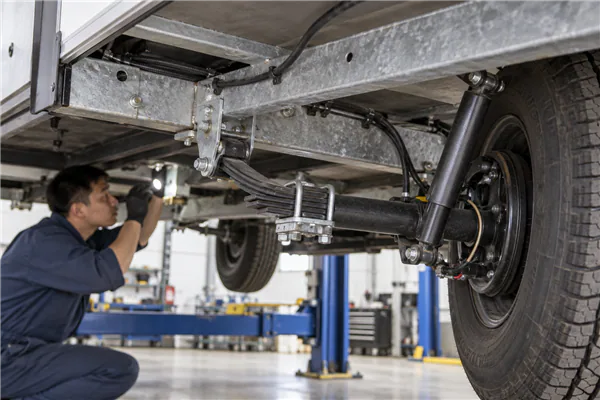
A commercial trailer should be inspectable without unnecessary disassembly. Ask where technicians can access running gear, brake components, electrical protection, stabilizers and common service points. For a fleet, this is often as important as the initial feature list.
Agree which routine checks the operator, dealer or end user is expected to carry out and what parts should be held locally.
Validate the finished configuration
Factory testing and shipment inspection should confirm the installed chassis-related components, visible attachments and towing interfaces against the approved specification. Market-specific legal or registration requirements must be checked separately for the intended destination.
A documented handover also helps the receiving team prepare its own inspection before retail or fleet deployment.
Buyer worksheet: questions to close before a quote
Use this short worksheet in a supplier meeting, a factory visit or a sample review. It is designed to turn customer requirements into records that engineering, production, quality and logistics teams can act on.
- Route and duty cycle defined in plain language
- Loaded mass assumptions reviewed with body and equipment choices
- Service access considered before production release
- Running-gear and towing interfaces included in inspection scope
- Destination-market requirements verified separately
For a new RVDwell project, this information can be reviewed alongside the factory capability, the custom-build process and the agreed shipment-inspection scope. The final requirement should always reflect the destination market and approved product configuration.
What evidence to request from the factory
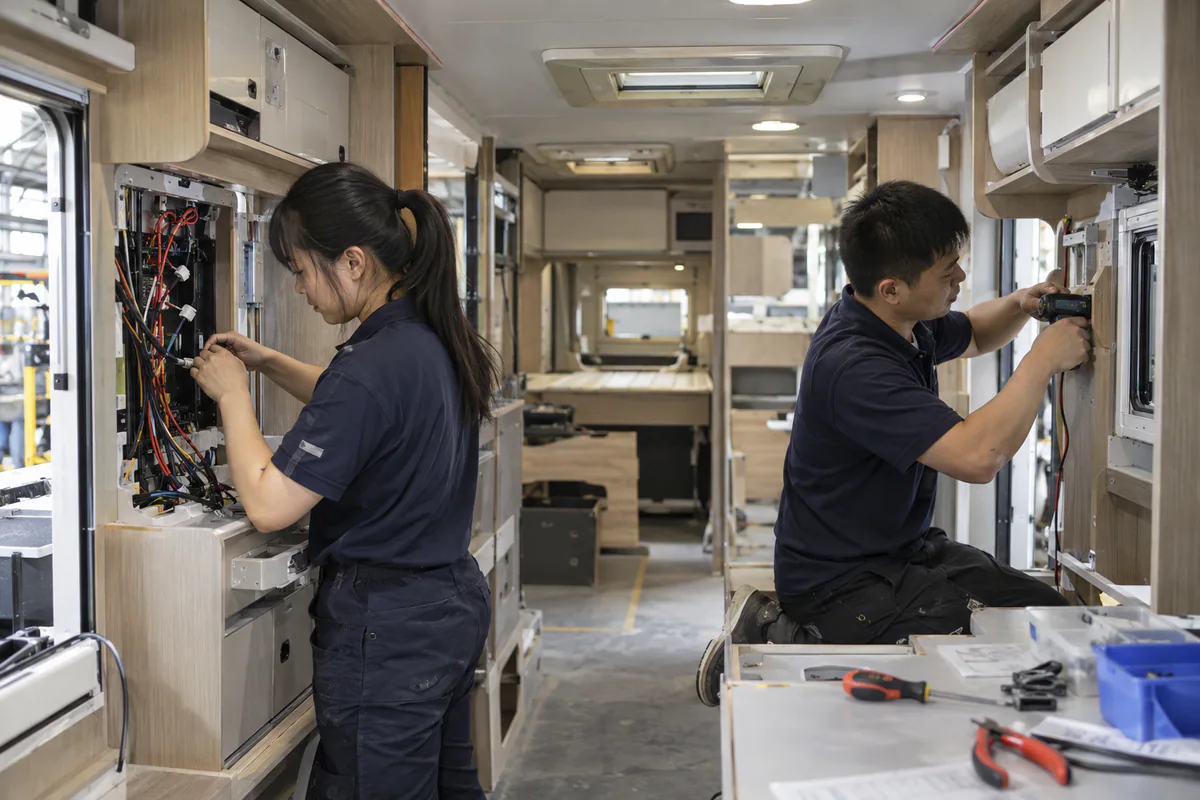
Useful evidence is specific to the unit and stage: an approved configuration record, production-stage photographs where appropriate, factory testing results, a corrective-action log and a shipment inspection record. It should show how customer requirements moved from the brief into the delivered trailer.
Do not rely on a generic certificate or a finished-product photograph as the only proof. Ask which records apply to your model, who completes them and how a failed check is corrected before the unit advances.
Frequently asked questions
Is higher ground clearance always better?
No. Clearance must work with the intended route, stability, entrance angles, towing setup and the complete loaded configuration. It is a system decision rather than a standalone product claim.
Can the chassis be changed after a sample?
It may be possible, but it can affect body attachments, mass, systems, testing and documentation. Treat it as a controlled engineering change rather than an informal option swap.
What information does a factory need first?
Start with the route, intended load, use frequency, towing environment, climate and service model.
Reference sources
External requirements and market rules should be checked against the destination and final configuration. These authoritative starting points support the planning questions in this guide.