Select a focused range
Compare compact, family, adventure and fleet platforms against your customers, target price position and local towing conditions.
 RVDwellGet a Quote ↗
WHOLESALE PROGRAMS
For importers and regional dealers, wholesale buying is a range-planning decision. Start with customer segments, towing conditions, service capacity and the number of configurations your team can manage.
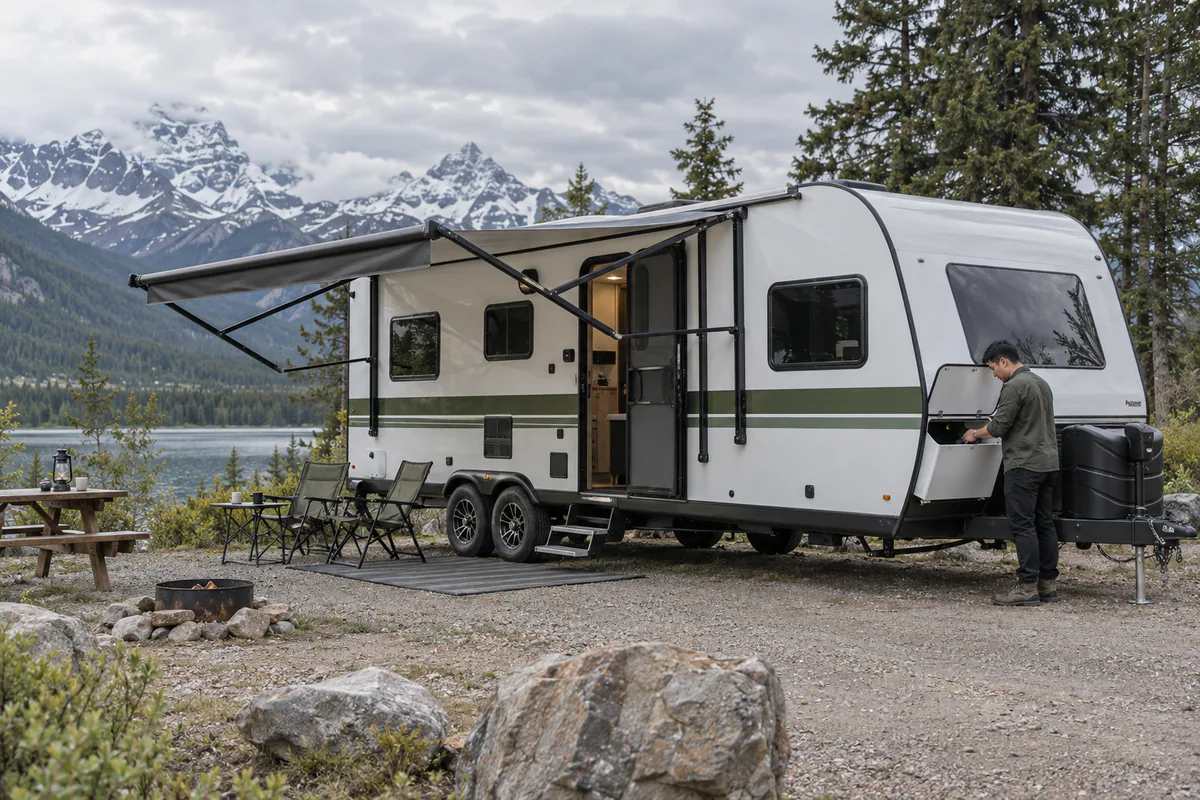
Importers, dealer groups and distributors establishing or expanding a travel trailer range.
Use the product application and customer requirements to guide decisions before agreeing the final build.
Compare compact, family, adventure and fleet platforms against your customers, target price position and local towing conditions.
Record standard equipment and approved options by model. Confirm dimensions, loaded-mass assumptions, power interfaces and documentation for the destination market.
Plan product information, parts identification, receiving inspection and dealer handover before the first shipment.
FROM BRIEF TO SHIPMENT
Factory testing and shipment inspection should check the actual approved configuration. Installation preparation and local obligations depend on the destination and buyer’s delivery model.
Provide target region, buyer profile, expected volume, timing and reference products.
Review model class, layout, configuration boundaries and application fit.
Resolve open engineering, component, finish and documentation decisions before production.
Agree factory evidence, unit identification, shipment condition and local receiving checks.
BUYER EVIDENCE
Agree which records will be provided for your exact project. A factory photo or generic checklist does not replace product-specific approval.
Final specifications, quantities and responsibilities are confirmed during project review.
Minimum order quantities depend on the selected platform, option scope and production plan. Share the model mix and expected volume for a project-specific discussion.
Yes, market-specific requirements can be reviewed. Keep each configuration and its approvals separate so labels, equipment, documents and inspection records remain traceable.
Compare relevant models and review the manufacturing information behind your decision.