
 RVDwell OEM TRAVEL TRAILERS
Travel Trailer Water System Specification: A B2B Planning Guide
Plan travel trailer fresh-water, waste-water, pump, plumbing and service requirements around actual customer use.
A travel trailer water system should be specified around expected occupancy, trip length, climate, local service access and the destination market. Capacity is only one factor; fill points, pump access, drainage, winter preparation and user instructions also determine whether the system works commercially.
Who this guide is for
This guide is for buyers specifying touring, rental or off-grid travel trailer water systems.
Define how customers will fill, use, drain, clean and prepare the system. The best specification is the one a real customer and service team can operate reliably.
Start with the trip and occupancy profile
A weekend couple, a family tourer and a rental fleet may need different water assumptions. Ask how long the trailer will operate away from services, what fixtures are included and how users will be expected to manage consumption. This prevents capacity from becoming an isolated sales feature.
Record whether the target use includes cold weather, remote campsites or frequent turnover.
Plan fill, drain and service access
Water systems need practical fill points, drain paths, pump access and clear identification. Review these with the layout before cabinetry and interior finishes make access difficult. A service technician should be able to inspect common components without damaging the finished interior.
For a fleet, include turnover steps such as visual checks, cleaning and any agreed preparation routine.
 RVDwell OEM TRAVEL TRAILERS
Need to compare a platform, custom requirement or factory process against your market brief?
Get a project checklist →Coordinate plumbing with climate and power
Pumps, hot-water equipment, ventilation, tank locations and freeze-risk areas should be reviewed together. The right solution depends on the target climate and approved operating instructions. Do not make broad winter-use claims without a defined application and user procedure.
If a system needs specific storage or drainage steps, include them in the manual and dealer handover.
Test and document the delivered system
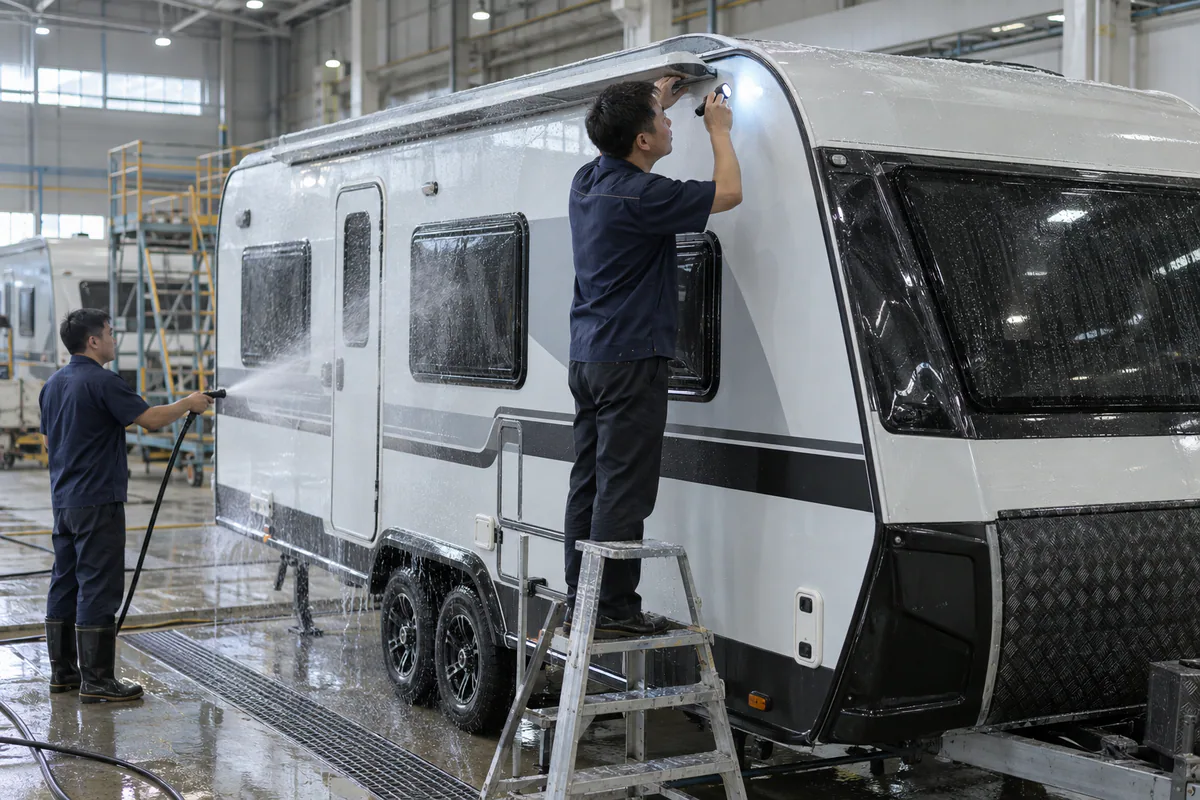
During factory testing, check agreed water functions within the available setup and record the outcome. At shipment inspection, verify fittings, labels, access points and included documents against the approved configuration.
The receiving team should complete its own arrival inspection before customer delivery or fleet deployment.
Buyer worksheet: questions to close before a quote
Use this short worksheet in a supplier meeting, a factory visit or a sample review. It is designed to turn customer requirements into records that engineering, production, quality and logistics teams can act on.
- Occupancy, trip length and service access defined
- Fill, drain and pump access reviewed in the layout
- Climate and storage instructions documented
- Rental turnover needs included where relevant
- Factory and arrival inspection records retained
For a new RVDwell project, this information can be reviewed alongside the factory capability, the custom-build process and the agreed shipment-inspection scope. The final requirement should always reflect the destination market and approved product configuration.
What evidence to request from the factory
Useful evidence is specific to the unit and stage: an approved configuration record, production-stage photographs where appropriate, factory testing results, a corrective-action log and a shipment inspection record. It should show how customer requirements moved from the brief into the delivered trailer.
Do not rely on a generic certificate or a finished-product photograph as the only proof. Ask which records apply to your model, who completes them and how a failed check is corrected before the unit advances.
Frequently asked questions
How much water capacity is enough?
The answer depends on occupancy, fixtures, trip length and access to services. Start with the customer application rather than a market headline.
Should water-system servicing be a dealer task?
Responsibilities vary, but the design should make routine inspection and approved maintenance practical for the intended service network.
What should be in the owner documentation?
Use instructions, normal preparation steps, cleaning guidance, drain or storage requirements and the escalation path for faults.
Reference sources
External requirements and market rules should be checked against the destination and final configuration. These authoritative starting points support the planning questions in this guide.